


 English
 Español
 عربى

Get Social
Choose DEIF for the perfect blend of
performance and aesthetics.
 Get Free Sample

Content
Moisture is the main reason laminate boards swell, warp, and separate at the seams. Standard laminate has a fiberboard core that absorbs water, which is why homeowners often hesitate to put it in damp rooms. waterproof laminate flooring addresses this problem with a core that resists water penetration, making it a realistic option for many spaces that were once off-limits.
This guide explains where the material performs well, where it should be avoided, how to prepare the subfloor, and what affects the final budget, so you can decide with confidence before the first board is laid.
The core question is not whether the product is waterproof, but whether the room, subfloor, and installation method can keep moisture away from the seams for the life of the floor.
Most rooms in a home can accept this type of flooring, but moisture-prone spaces demand more attention to detail. The following areas are common candidates, each with its own considerations.
Can you install laminate flooring in a bathroom? Yes, provided the product has a waterproof core and the installer seals the perimeter properly. Bathrooms create splashes, humidity spikes, and occasional standing water near the tub or shower threshold. A waterproof core combined with silicone sealant at the wall junctions gives the floor a reliable barrier.
Basements present the greatest challenge because groundwater vapor can rise through the concrete slab. A waterproof core helps, but the subfloor must be dry and protected by a vapor barrier before installation begins.
These rooms see frequent spills, dishwasher leaks, and washing machine overflow. Waterproof laminate handles these events well when spills are wiped up promptly.
Avoid floor drains, saunas, steam rooms, and any area that receives regular wet mopping or sits in standing water. Standing water will eventually find its way under the boards, even when the product is rated as waterproof, because the seams become the weak point.
Avoid these locations: floor drain zones, saunas and steam rooms, outdoor covered patios with standing rain, and areas that are flooded during routine cleaning.
Homeowners weighing waterproof laminate often compare it with vinyl and tile. Each option has trade-offs in comfort, repair, and water tolerance. The table below summarizes the differences that matter most in wet areas.
| Feature | Waterproof Laminate | Luxury Vinyl Plank | Ceramic Tile |
|---|---|---|---|
| Water resistance | High with sealed seams | Very high | Very high |
| Underfoot comfort | Firm, moderate warmth | Softer, warmer | Hard, cold |
| Repair difficulty | Moderate, click-lock replacement | Easy, individual planks | Difficult, grout matching |
| Typical install speed | Fast, floating system | Fast, floating or glued | Slower, mortar and grout |
Searches for laminate vs vinyl plank for wet areas often come down to appearance and feel. Vinyl offers more flexibility at the seams, while laminate typically delivers a more rigid, wood-look surface with a harder wear layer. For SPC vs WPC flooring for moisture prone rooms, SPC cores are generally more dimensionally stable, whereas WPC cores provide more cushioning underfoot. Your choice depends on how the room is used and how much water exposure it receives.
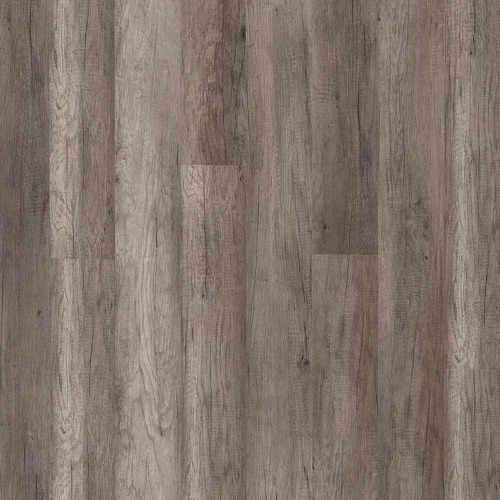
A floating floor is only as good as the surface beneath it. Most installation failures trace back to a subfloor that was not tested, leveled, or protected before work began.
What subfloor moisture content is safe for laminate? Concrete should be tested with a calcium chloride or in-situ relative humidity test before installation. Most manufacturers require readings within the range specified in their installation guide, and any reading above that limit calls for drying time or a moisture-mitigation system.
The best underlayment for laminate flooring in a damp basement is typically a combined moisture barrier and sound-reduction pad. Look for a pad with a continuous vapor-retarder film and a thickness suited to the floor's click system.
Laminate flooring over a concrete slab usually needs a polyethylene vapor barrier laid with overlapping seams and taped joints. The barrier should run up the perimeter walls slightly to block lateral moisture migration.
Good installation practices make the difference between a floor that lasts for decades and one that fails within a few seasons. Several details deserve particular attention in wet areas.
How much expansion gap for laminate flooring is needed? Most installations call for a gap of roughly 8 to 10 millimeters around the perimeter, including against walls, cabinets, and fixed objects. This space allows the floor to move slightly with temperature and humidity changes without buckling.
Laminate flooring with floor heating is possible when the product is rated for radiant heat. Surface temperatures should stay within the range stated by the manufacturer, and the heating system should be brought up gradually to avoid rapid moisture changes in the boards.
Seal all wall junctions and threshold transitions with flexible silicone rather than rigid caulk, so the joints can move with the floor.
How to protect laminate flooring from water damage is largely a matter of routine. Wipe up spills immediately and use a damp mop rather than flooding the surface. Standing water is the single most damaging condition for any laminate, waterproof or not.
Wipe spills fast
Clean liquids within minutes to prevent seepage at the joints.
Mop lightly
Use a barely damp cloth or mop with a pH-neutral cleaner.
Check seams
Inspect the perimeter and transitions twice a year for gaps.
Pricing depends on product thickness, core type, wear layer, subfloor preparation, and labor complexity. Rooms that need moisture barriers, leveling, or custom transitions cost more than a simple dry-area installation. Request a site-specific estimate that breaks out materials, underlayment, and prep work.
[insert verified price range, source required]
Yes, when the product has a verified waterproof core and the perimeter is sealed with flexible silicone. Bathrooms with standing water near showers or floor drains should be assessed on a case-by-case basis.
Standard laminate with a fiberboard core can swell when exposed to water. Waterproof laminate resists this, but standing water can still damage seams and edges over time.
Acceptable readings depend on the manufacturer and the test method used. Follow the limits in the product's installation guide and retest after any drying period.
A professional assessment covers room measurements, subfloor moisture testing, a recommended product and underlayment, and a written quote. Contact us for a free assessment and quote for your space, and we will help you match the right waterproof laminate to the conditions in your home.

We provide customers with sustainable and eco-friendly
engineered wood solutions and services.
Choose DEIF for the perfect blend of
performance and aesthetics.
