


 English
 Español
 عربى
عربى
Get Social
Choose DEIF for the perfect blend of
performance and aesthetics.
 Get Free Sample

Content
If you are sourcing natural veneer doors, the outcome of your installation depends on three critical variables that most specifiers overlook until problems appear on-site. Many professionals spend weeks comparing grain patterns in showrooms, only to discover months after installation that the doors are cupping, separating from their cores, or showing finish failure. This happens because the visible surface tells only part of the story.
The doors that perform are those specified with attention to core construction (solid wood versus hollow versus engineered), veneer thickness and grain consistency (how thick the real wood layer is and whether adjacent door panels will match across a batch), and moisture management in bonding and edge treatment (resistance to humidity fluctuation and proper sealing). This guide walks through exactly what to evaluate before placing your order, with the specific questions you should ask suppliers.
The term "natural veneer" often appears in specifications alongside terms like "wood grain," "laminate," and "melamine finish"—but these are not equivalent products. A natural veneer door uses a thin layer of genuine wood, sliced or peeled directly from a log, and adhesively bonded to an engineered substrate core. This differs fundamentally from photographic reproductions or synthetic overlays.
The market offers four primary surface treatments for interior doors, and specifiers must distinguish between them early in the design phase:
| Surface Type | Material Composition | Repairability | Cost Tier |
|---|---|---|---|
| Natural Veneer | Real wood sliced from log | Yes, if veneer is thicker than 0.5mm | Premium |
| Reconstituted Veneer | Wood byproducts reassembled | Limited | Mid-range |
| Melamine Paper | Photographic print on resin-impregnated paper | No | Budget |
| PVC Foil | Vinyl film applied to substrate | No | Budget to Mid |
Specifiers often assume that any wood-looking door surface is interchangeable. This assumption costs projects both budget clarity and performance predictability. A natural veneer door with proper core construction and sealed edges will remain stable through 10+ years of humidity cycling. A melamine door in the same environment may begin showing edge delamination or print fading within two to three years.
One practical way to verify whether a product is genuine natural veneer: examine whether grain patterns vary visibly across multiple samples. Natural veneer shows grain variation—knots, color shifts, growth rings—because each door receives a unique slice from the log. If showroom samples appear identical across dozens of panels, they are almost certainly melamine or PVC foil, which use the same photographic image repeated across all units. This is not a flaw of those products; it is simply their nature. But for a specification that requires natural veneer, this uniformity signals you are looking at a different material class.
If natural veneer is the skin of the door, the core is its skeleton. A premium veneer bonded to a weak or unstable core is like applying high-quality paint to a foundation with structural cracks—the finish cannot overcome the underlying problem. Many specifiers assume that if a door looks flat and intact during delivery and inspection, the core is acceptable. This assumption leads to costly surprises six to eighteen months after installation.
The market offers several core options for natural veneer doors. Each has distinct implications for moisture stability, repairability, sound isolation, and long-term performance:
The correlation between core choice and on-site performance is direct and observable. A door with an MDF core in a high-humidity bathroom may begin to show visible edge swelling, discoloration, or finish cracking within months of exposure. The same veneer and finish on an HDF or solid-core door will remain stable for years. This is not a failure of the veneer or the finish—it is the core failing to resist moisture transmission.
When requesting quotes for natural veneer doors, include these core-specific questions in your specification:
Suppliers who can answer these questions with specifics—material specifications, test certifications, adhesive data sheets—are demonstrating manufacturing control. Those who respond vaguely ("It's quality HDF") or deflect are signaling either ignorance of their own product or unwillingness to stand behind it. For critical projects, request material certs or test reports before committing to large orders.
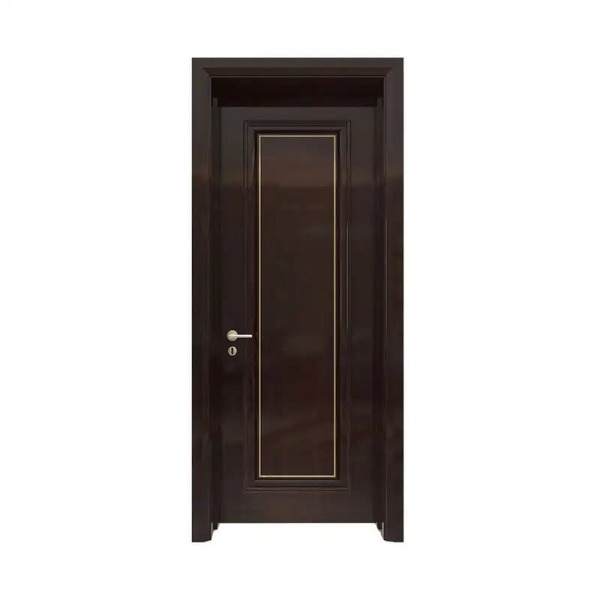
Once core selection is confirmed, attention shifts to the veneer layer and its surface treatment. This is where specifiers often focus first, but it should be secondary decision—a decision made only after core performance has been secured. A thick, beautifully matched veneer on a weak core is still a failed door. Conversely, a slightly thinner veneer on a stable core with robust finishing will outperform in real-world conditions.
Natural veneer is sold by thickness, typically measured in millimeters. Thickness directly affects both the door's cost and its repairability over time:
The decision on veneer thickness is a lifecycle cost calculation. A thin-veneer door with a 10-year replacement cycle costs less upfront but incurs higher total-cost-of-ownership when accounting for multiple replacements and reinstallation labor. A thicker-veneer door on a solid or HDF core with refinishing capability may have higher first cost but remains a serviceable asset for 20+ years with occasional sanding and refinishing.
When specifying multiple doors in the same project, especially along a corridor or in an open floor plan, grain continuity becomes a quality marker. High-end suppliers employ grain-matching techniques where adjacent or opposing doors are selected to create visual flow, ensuring that the wood grain appears to progress naturally across the door run. This requires:
Budget-tier suppliers typically do not offer grain matching; they supply doors randomly sequenced from veneer stock. Mid-tier suppliers may offer optional grain matching at a surcharge. Premium suppliers routinely provide grain-matched sequences at no additional cost as a standard service. If your project specification includes language like "grain-matched veneer doors" or "consecutive grain sequence," this must be explicitly confirmed in the quote and included in the door schedule documentation sent to the supplier.
The finish—typically a UV-cured polyurethane (PU), UV-cured lacquer, or water-based acrylic—serves two functions: aesthetic protection and moisture sealing. A finish that looks good in the showroom but fails to seal the veneer edges and face will allow moisture to migrate into the core, leading to swelling, delamination, or finish failure within months of high humidity exposure.
For most specifiers, factory pre-finished natural veneer doors reduce risk and improve outcome predictability. The additional cost of factory finishing is recouped through elimination of on-site finishing labor, lower risk of rework, and consistent color matching across the entire door set.
The top and bottom edges of a door are the primary pathways for moisture infiltration into the core. Even with a factory-applied finish on the face and back veneer, an unsealed or poorly sealed edge will allow humidity to migrate inward, destabilizing the core and eventually causing visible delamination or swelling. This problem is often invisible during initial inspection but becomes catastrophic weeks or months after installation, especially in high-humidity zones like bathrooms, kitchens, or buildings with poor HVAC control.
The most effective edge protection uses matching wood or PVC edge banding, applied with moisture-resistant adhesive and then sealed with finish coat:
Not all interior spaces have the same humidity risk. Specifiers should consider edge and moisture treatment based on the door's location:
| Location Type | Humidity Risk | Recommended Core | Recommended Edge Treatment |
|---|---|---|---|
| Bathroom | Very High | HDF or Solid | Wood or PVC banding plus finish coat |
| Kitchen | High | HDF or Solid | Wood or PVC banding |
| Laundry Room | High | HDF or Solid | PVC banding or seal coat |
| Bedroom / Corridor | Moderate | HDF / MDF acceptable | PVC banding or seal coat |
| Climate-Controlled Office | Low | MDF acceptable | Seal coat sufficient |
This table is not prescriptive but rather a guide to matching door specification to environmental reality. A specifier over-specifying (HDF core with wood edge banding in a dry office) incurs unnecessary cost. Conversely, under-specifying (MDF core with seal coat only in a bathroom) courts failure. The most cost-effective specification aligns core type, veneer thickness, edge treatment, and finish to the actual moisture profile of the location.

A vague inquiry—"I need natural veneer doors, what is your price?"—will yield a vague quote that likely undercuts your actual needs or leaves ambiguities that lead to contract disputes during production. Specifiers who take time to detail their requirements upfront receive accurate quotes, faster lead times, and higher-quality products because the supplier understands expectations from the start.
When reaching out to suppliers for natural veneer door quotes, include these details in your inquiry:
Suppliers who take time to ask clarifying questions based on your specification—rather than simply quoting a generic "natural veneer door"—are demonstrating that they understand the product and your project's complexity. This is a positive signal of manufacturing maturity.
To streamline communication, create a simple door schedule and attach it to your inquiry email. Example format:
| Door ID | Location | Size (W x H mm) | Quantity | Wood Species | Core Type | Finish |
|---|---|---|---|---|---|---|
| D01 | Main Bedroom | 800 x 2100 | 1 | Walnut | HDF Solid | Factory PU Matt |
| D02 | Guest Bedroom | 800 x 2100 | 1 | Walnut | HDF Solid | Factory PU Matt |
| D03 | Master Bath | 750 x 2100 | 1 | Walnut | HDF Solid + PVC Banding | Factory PU Gloss |
A door schedule like this demonstrates to suppliers that you are a professional buyer who understands the product. It significantly increases the likelihood of receiving a complete, accurate quote without follow-up emails requesting clarifications.
Before committing to a large order, always request a sample door or sample panel. Specify that the sample should use your actual wood species, core type, veneer thickness, and finish. Examine the sample for:
Many specifiers skip the sample stage to save time or money, only to discover during installation that the doors do not match the design intent. A 50-unit order of doors that do not match expectations is far more costly than a single-door sample investment upfront.
Product Overview
To help specifiers align budget with performance expectations, the following matrix compares three common specification tiers for natural veneer doors across key variables:
| Specification Tier | Budget | Mid-Range | Premium |
|---|---|---|---|
| Core Type | MDF or Hollow | HDF with frame | Solid or HDF |
| Veneer Thickness | 0.2–0.4mm | 0.5–0.8mm | 1.0–2.0mm |
| Edge Banding | Seal coat only | PVC or minimal wood | Matched wood banding |
| Finish | Unfinished or basic | Factory pre-finished | Premium factory finish |
| Grain Matching | None | Optional at premium | Standard |
| Expected Service Life | 3–5 years | 7–10 years | 15+ years with refinishing |
| Refinishing Capability | No | Limited (light sanding) | Full (sanding and restaining) |
| Relative Cost | 100% | 120–150% | 180–250% |
The cost multipliers shown are approximate and vary based on wood species, location, and supplier efficiency. The key insight is that premium specifications carry 80–150% additional material and labor cost, but deliver 5–15 additional years of service life plus full refinishing capability. For a 20-year building lifecycle, premium-tier doors often prove more cost-effective than two cycles of budget-tier replacement.
Understanding the internal structure of different door cores helps specifiers make faster, more confident decisions:
Yes. Natural veneer doors typically cost 20–40% more than melamine or budget laminate doors due to the cost of real wood veneer, more precise manufacturing, and often superior core materials. However, when calculated over a 20-year building lifecycle, the premium often becomes neutral or cost-effective because natural veneer doors can be refinished multiple times, whereas budget melamine doors are discarded and replaced. For a single 5-year occupancy, budget options may be appropriate; for longer-term ownership, natural veneer is more economical.
It depends on veneer thickness. Doors with veneer thicker than 0.6mm can be lightly sanded to remove surface scratches and worn finish, then refinished with new lacquer, oil, or stain. Veneer thicker than 1.0mm allows full sanding and refinishing cycles equivalent to solid wood. Thinner veneer (0.2–0.4mm) cannot be sanded without risking breakthrough to the substrate; these doors should be treated as non-refinishable and replaced rather than restored. Always check with the manufacturer for their specific veneer thickness before assuming refinishing is possible.
The most commonly available species are Oak, Walnut, Ash, Cherry, Maple, and Teak. Oak is widely stocked and cost-effective; Walnut commands a premium for its dark color and distinctive grain; Ash offers a light, open-grain appearance; Cherry has richer color and takes stain well; Maple is hard and durable; Teak is expensive but extremely moisture-resistant and durable. Availability and pricing vary by region and supplier. Exotic species (Wenge, Zebrano, Padauk) are available but typically require longer lead times and carry significant cost premiums. Always confirm availability and lead time for your chosen species before specifying.
Natural veneer doors can perform well in high-humidity environments if specified correctly. The critical factors are: (1) use of HDF or solid core rather than MDF or hollow core; (2) proper edge sealing with wood or PVC edge banding plus finish coat; (3) factory pre-finished doors with UV or polyurethane lacquer to seal all surfaces; and (4) adequate bathroom ventilation to prevent humidity from exceeding 60–70% relative humidity. A poorly specified veneer door (thin veneer on MDF core with seal coat only edges) will fail in a bathroom within months. A well-specified door (0.6mm+ veneer on HDF core with edge banding and factory finish) will perform reliably for 10+ years. Specification matters more than material choice in humid environments.
Grain matching ensures that veneer on adjacent doors or opposing doors is cut from the same log in sequential order, creating visual continuity of grain pattern across the door run. This requires the supplier to reserve sequential veneer stock and plan door assembly accordingly, adding cost and lead time. Random grain sequencing means doors are supplied with veneer randomly selected from stock, resulting in different grain patterns on each door. For hallways, open floor plans, or any location where multiple doors are visible simultaneously, grain matching significantly improves the visual cohesiveness and perceived quality of the installation. For distributed doors (each hidden from the others), random sequencing is acceptable and saves cost. Specify grain matching explicitly if it is required for your project.
Service life depends on core type, veneer thickness, finish quality, and environmental conditions. Budget doors (thin veneer on MDF) typically last 3–5 years before finish wear or core instability becomes noticeable. Mid-range doors (0.6mm veneer on HDF core) last 7–10 years with normal use. Premium doors (1.0mm+ veneer on solid core) with proper maintenance can last 15+ years, and can be refinished to extend service life indefinitely. In high-humidity or high-traffic environments (commercial), service life is reduced by 30–50%. Plan specifications with the building's intended occupancy duration in mind: a 5-year lease justifies budget products; a 25-year ownership justifies premium products.
Depending on the building type and jurisdiction, consider specifying: (1) fire-rating compliance (e.g., 20-minute or 60-minute fire rating) with appropriate certification; (2) acoustic performance ratings if sound isolation is required; (3) FSC or PEFC certification for sustainably sourced wood veneer, increasingly required in public and corporate buildings; (4) moisture-resistance testing per ISO standards to verify core and adhesive performance; (5) low-VOC or formaldehyde-free finish certification for indoor air quality compliance. Specifying standards upfront eliminates surprises during procurement and ensures products meet building codes and tenant expectations.
Before you reach out to suppliers or place an order, review this checklist to ensure your specification is complete and your decision is informed:
Taking time to work through this checklist before committing to a large order dramatically reduces the risk of on-site surprises, performance failure, or aesthetic mismatch. Natural veneer doors are a significant investment in the interior finish of a building. Thorough specification and supplier vetting upfront pays dividends in quality, durability, and client satisfaction.

We provide customers with sustainable and eco-friendly
engineered wood solutions and services.
Choose DEIF for the perfect blend of
performance and aesthetics.
