


 English
 Español
 عربى
عربى
Get Social
Choose DEIF for the perfect blend of
performance and aesthetics.
 Get Free Sample

Content
When selecting a flooring material for your home or commercial space, the aesthetic appeal extends far beyond color and wood species. The geometric pattern in which individual planks are arranged creates a distinctive visual identity that can transform an entire room. Two of the most popular patterned flooring options are chevron and herringbone designs, each offering unique visual and structural characteristics. While these patterns are often mentioned interchangeably, they possess distinct differences in geometry, installation complexity, cost, and maintenance requirements.
Understanding these differences is essential for making an informed decision that aligns with your design vision, budget constraints, and practical needs. This comprehensive guide explores the nuances of chevron wood flooring and herringbone patterns, helping you determine which option best suits your project.
The chevron pattern, also known as a V-joint pattern, features planks arranged in a distinctive zigzag formation. Each row of flooring forms a sharp, pointed angle at the center, creating a continuous series of V-shaped patterns throughout the floor. The planks are cut at precise 45-degree angles at both ends, allowing them to meet perfectly at their edges to form this characteristic V-shape.
In a chevron layout, the cut planks are oriented in alternating directions, with each plank angled to meet its neighbor at the center seam. This creates a unified, flowing visual pattern that appears to move across the floor in a wave-like motion. The result is a sophisticated, modern aesthetic that draws the eye along the direction of the pattern.
The herringbone pattern takes its name from the skeletal structure of herring fish, characterized by a brick-like arrangement. In this configuration, planks are placed at 90-degree angles to one another, alternating between running perpendicular to the next row. Each plank is cut at 45-degree angles, but unlike chevron, the planks do not meet at a center point along their seams.
Instead, herringbone creates a staggered, rectangular pattern where each plank offset sits diagonally adjacent to its neighbors. The visual effect is that of rectangular tiles arranged in a classic herringbone brick pattern, offering a more traditional, time-honored appearance. This pattern has been used in architecture and design for centuries.
Installing chevron engineered wood flooring demands exceptional precision and skill. The 45-degree angle cuts on both ends of each plank mean that every piece must be positioned with mathematical accuracy. The sharp V-point center seams create visible focal points that make any installation errors immediately apparent to the eye.
The installation process for chevron flooring typically involves the following steps:
The interlocking nature of the pattern means that mistakes in one plank can cascade through subsequent rows, making professional installation highly recommended. Installation time is typically longer compared to standard flooring, and labor costs reflect this complexity.
Herringbone installation, while still requiring skill and precision, is generally considered more forgiving than chevron. The staggered brick-like pattern allows for slightly more flexibility in plank placement. Individual errors in alignment are less visually apparent since the pattern does not rely on a single central alignment point.
The herringbone installation process follows these general steps:
Installation time for herringbone remains substantial compared to simple plank layouts, but it typically requires less precision than chevron work. Many skilled flooring installers can handle herringbone installation with greater ease and faster completion times.
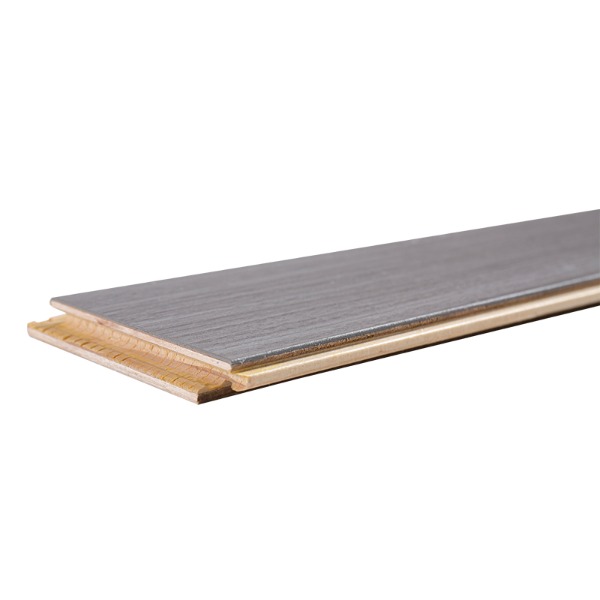
Both chevron and herringbone patterns command premium pricing compared to standard straight-plank flooring. The reason is multifaceted: specialized cutting, higher waste rates during manufacturing, and the need for pre-engineered components increase production costs.
Engineered wood options for both patterns typically cost 20-50 percent more than conventional plank flooring of the same wood species. Solid wood chevron and herringbone options can cost 40-80 percent more than solid wood straight planks, depending on the wood species and quality grade selected.
Installation represents a significant portion of the overall project cost for patterned flooring. A professional installer's time investment is considerably higher for both patterns:
| Flooring Type | Estimated Installation Time (per 100 sq ft) | Typical Labor Cost Impact |
|---|---|---|
| Standard plank flooring | 2-3 hours | Baseline |
| Herringbone pattern | 4-6 hours | 100-150% higher |
| Chevron pattern | 6-10 hours | 150-250% higher |
While initial costs are higher for patterned flooring, both chevron and herringbone layouts offer strong aesthetic value that enhances property appeal. Real estate market data indicates that distinctive, well-executed wood flooring patterns can contribute positively to perceived home value, though this varies by regional market and property type.
The chevron pattern creates a dynamic, directional visual effect that guides the viewer's eye in a specific direction across the space. This directional quality makes chevron flooring particularly effective at:
The sharp V-points in chevron patterns demand visual attention, making it a statement-making choice suitable for primary living areas where you want the flooring to be part of the interior design conversation.
Herringbone's rectangular brick pattern offers a more subtle, classic aesthetic that works across a wider range of design styles. The pattern's historical presence in architecture gives it an inherently timeless quality. Herringbone flooring tends to:
The pattern's familiarity makes it a safe choice that appeals to broad aesthetic preferences while still distinguishing a space from standard plank installations.
Choosing between chevron and herringbone should consider your overall interior design vision. Chevron pairs naturally with minimalist, Scandinavian, and contemporary design approaches. Herringbone complements traditional, farmhouse, transitional, and eclectic styles more readily. However, professional designers increasingly use chevron in traditional spaces and herringbone in modern settings to create unexpected, sophisticated contrasts.
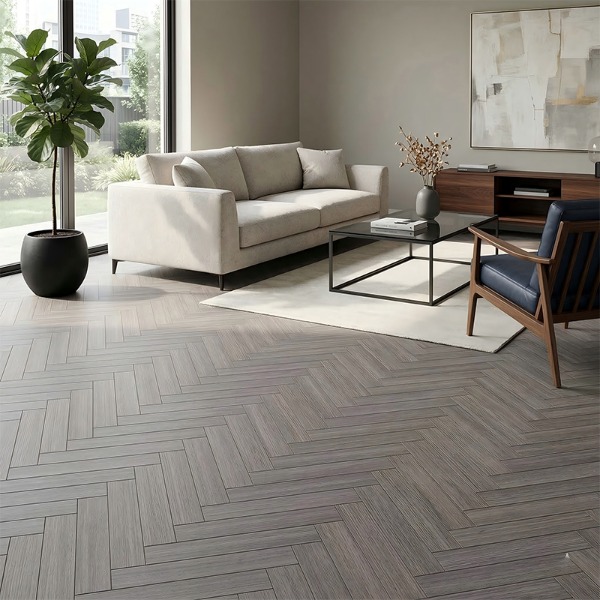
Both chevron and herringbone patterns present unique structural considerations due to the angled plank arrangements. The 45-degree angles in both patterns create stress concentration points at the miter joints, particularly in chevron designs where pieces meet at sharp points.
Engineered wood products handle these stress points better than solid wood due to their cross-grain construction, which provides inherent stability. Solid wood chevron and herringbone floors must be carefully acclimated and maintained to manage the expansion and contraction that occurs with humidity and temperature fluctuations.
Patterned flooring reveals foot traffic patterns more visibly than uniform plank layouts. High-traffic diagonal lines across a herringbone pattern become apparent through accelerated wear, while chevron's V-points can show traffic concentration lines distinctly. This is not a durability issue but rather a natural aesthetic consequence of the pattern's geometry.
Proper finishing with high-quality sealants and polyurethane topcoats is essential for both patterns to resist moisture, staining, and wear. Herringbone typically requires touch-up refinishing less frequently than chevron due to the less pronounced visual concentration of wear.
Maintenance for both patterned floors follows similar protocols to standard hardwood:
The intricate joints in both patterns require extra attention during cleaning to prevent moisture from entering seams, which can cause edge swelling or cupping over time.
| Characteristic | Chevron Pattern | Herringbone Pattern |
|---|---|---|
| Visual Pattern | Continuous V-shaped zigzag | Alternating rectangular brick |
| Plank Angle Cut | 45-degree both ends | 45-degree both ends |
| Installation Difficulty | Very high (requires precision) | High (moderately forgiving) |
| Installation Time | 6-10 hours per 100 sq ft | 4-6 hours per 100 sq ft |
| Material Waste | 15-20 percent | 10-15 percent |
| Cost Premium vs Standard | 40-80 percent higher | 30-70 percent higher |
| Design Style Fit | Modern, contemporary | Traditional, transitional |
| Structural Stability | Requires dimensional stability | Requires dimensional stability |
| Visibility of Traffic Patterns | Highly visible at V-points | Moderately visible |
| Refinishing Capability | Depends on solid vs engineered | Depends on solid vs engineered |
The first decision point should be your overall interior design vision and the design style of your home. If your design approach leans modern, minimalist, or contemporary, chevron's dynamic directional pattern aligns naturally with these aesthetics. For traditional, farmhouse, or eclectic design schemes, herringbone's classic brick pattern complements your existing style more intuitively.
Room shape and size influence pattern selection. Chevron's directional quality makes it excellent for creating visual length in shorter, narrower rooms. The V-shapes naturally draw the eye along the floor's length, making spaces appear more expansive. Herringbone works well in any room configuration, offering consistent visual interest regardless of room proportions.
Climate and moisture levels in your region should inform the solid versus engineered decision. Areas with significant seasonal humidity variation or lower humidity levels benefit from engineered products' superior dimensional stability. Stable indoor climates with consistent temperature and humidity control can support solid wood options more successfully.
Establish a realistic budget including materials and labor. Chevron generally costs more due to installation complexity, while herringbone offers premium patterning at slightly lower expense. Engineered options provide cost savings compared to solid wood while delivering similar visual results.
Consider your willingness to maintain wood flooring carefully. Patterned floors require attentive care to preserve appearance and durability. If minimal maintenance is preferred, modern finishes with enhanced durability ratings provide better protection against showing wear and require less frequent refinishing.
Engineered wood chevron and herringbone products are generally compatible with radiant heating systems, as the plywood core provides better dimensional stability under temperature fluctuations. Solid wood products are typically not recommended for radiant heat installations due to increased movement risk. Always verify compatibility with your specific product specifications and radiant heating system before proceeding.
Chevron patterns typically generate 15-20 percent waste due to the precision angle cuts required and the difficulty of fitting pieces around room perimeters. Herringbone installations usually result in 10-15 percent waste. Experienced installers may minimize waste through careful planning and layout optimization, while complex room shapes may increase waste percentages significantly.
Durability is comparable between chevron and herringbone when using the same wood species, construction type, and finish. The difference lies in how wear becomes visible over time. Herringbone tends to mask traffic patterns slightly better than chevron due to the less pronounced center point concentration. Proper maintenance and quality finishing are more important durability factors than pattern choice.
Solid wood versions can be refinished multiple times, with professional refinishing possible every 7-15 years depending on wear. Engineered wood products can typically be refinished only once or twice due to the limited thickness of the hardwood veneer. Always consult manufacturer specifications before planning refinishing work on engineered products.
Both patterns show dust and debris more readily than simple plank flooring due to the increased number of seams and angles. Regular sweeping and vacuuming are essential for both. Lighter wood species and finishes will show dust more visibly than darker tones. Matte finishes reveal dust particles more than glossy or satin finishes.
Standard T-shaped or reducer molding transitions work for both patterns. The irregular edges of chevron or herringbone can be finished with custom-milled transition pieces that align with the pattern's end points. A straight transition line typically works best aesthetically and structurally, creating a clean visual break between flooring types.
Both chevron and herringbone require fully flat, stable subfloors with moisture levels between 6-9 percent for wood products. Concrete subfloors must have moisture barriers. Deflection testing ensures the subfloor can support the flooring without flexing. Moisture testing is critical, as expansion and contraction from moisture changes can cause seams to separate in patterned installations.
Engineered flooring using sustainably harvested veneers offers a more eco-conscious option, as less solid wood is required per plank. FSC-certified products from responsible forestry sources are available for both patterns. Reclaimed or salvaged wood chevron and herringbone options provide environmental benefits, though availability is limited and costs are typically premium.

We provide customers with sustainable and eco-friendly
engineered wood solutions and services.
Choose DEIF for the perfect blend of
performance and aesthetics.
