


 English
 Español
 عربى
عربى
Get Social
Choose DEIF for the perfect blend of
performance and aesthetics.
 Get Free Sample

Content
When discerning architects, designers, and residential developers select flooring materials, they seek more than aesthetics. They demand durability, stability, and the authentic character that only genuine wood can provide. This is where specialized solid hardwood flooring factory operations distinguish themselves from mass-production facilities.
A dedicated solid wood flooring manufacturer doesn't merely process timber; it orchestrates a complex ballet of material science, precision engineering, and quality assurance. From the moment raw logs enter the facility to the final plank leaving the warehouse, every step is calibrated to transform natural wood into a product worthy of high-end residential and commercial spaces.
Understanding this manufacturing journey reveals why premium solid hardwood flooring commands respect in the design community and why material selection—particularly species like American black walnut—remains a cornerstone of luxury interior design.
The foundation of exceptional solid hardwood flooring begins with material selection. American black walnut stands apart in the global timber marketplace, not merely as a commodity, but as a material with distinctive properties that command premium positioning in high-end projects.
Black walnut presents a visual character that defies commodification. Its heartwood exhibits rich chocolate browns and deep purples, often with dramatic grain patterns that create movement and depth. Unlike uniform, engineered surfaces, each plank tells a story through natural variation—color gradations shift subtly across boards, and grain patterns remain gloriously unpredictable.
In luxury residential settings, this material creates an atmosphere of understated sophistication. Whether installed in minimalist contemporary homes or traditional estates, black walnut serves as a neutral anchor that complements rather than competes. Commercial applications—high-end retail environments, professional offices, boutique hospitality spaces—benefit from this calming yet distinctive aesthetic presence.
Beyond appearance, black walnut delivers measurable performance advantages. The Janka hardness rating for black walnut typically ranges between 1010 and 1100, positioning it firmly in the mid-to-upper hardness spectrum. This means it resists denting and compression better than softer woods like ash or hickory, while remaining easier to machine than exotic hardwoods.
Dimensional stability—the wood's resistance to expansion and contraction with humidity changes—represents a critical manufacturing consideration. Black walnut exhibits moderate movement, requiring precise kiln-drying protocols (typically targeting 8 to 10 percent moisture content) to minimize cupping, warping, and gapping after installation. Proper drying transforms potential liability into reliability.
Premium manufacturers source American black walnut exclusively from FSC-certified, sustainably managed forests. This certification ensures that harvesting practices maintain forest ecosystems, support local economies, and meet rigorous environmental standards. For architects and designers specifying materials for LEED-certified buildings or sustainability-conscious clients, FSC certification provides documentation of responsible sourcing—a growing requirement in institutional and high-profile commercial projects.
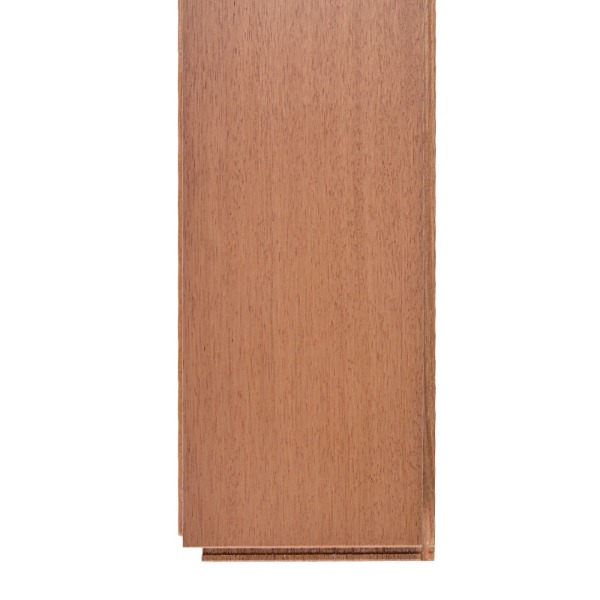
What differentiates a professional solid hardwood flooring factory from smaller operations lies in infrastructure, process discipline, and quality assurance rigor. The path from forest to finished product encompasses multiple specialized stages, each critical to final performance.
Manufacturing excellence begins before milling commences. Premium operations maintain relationships with selective log suppliers who understand grade requirements. Incoming logs undergo visual inspection—color consistency, grain character, defect assessment. Logs with excessive knots, checking (surface cracks), or color inconsistency are diverted to lower-grade applications or biomass processing.
This initial gatekeeping proves essential. A single misgraded log entering a high-grade production run can compromise an entire batch's consistency. Leading manufacturers reject 15 to 25 percent of offered inventory, accepting only material meeting strict specifications. This selectivity drives per-unit costs but ensures that finished products maintain tight tolerances for color and character.
After debarking and rough sawing, lumber enters large-capacity industrial kilns where the moisture content migration occurs under controlled conditions. This step transforms wood from "green" (freshly felled, high-moisture) to dimensionally stable state suitable for precision machining.
Professional kilns employ real-time humidity and temperature monitoring, with computer systems adjusting parameters continuously. The drying schedule—temperature progression, humidity curves, conditioning phases—spans 10 to 15 days depending on thickness and species. Black walnut's characteristics demand careful handling; aggressive drying schedules cause checking and warping, while slow schedules extend production timelines and lock capital in inventory.
The target endpoint remains consistent: 8 to 10 percent moisture content, measured via in-kiln pins and spot-checked with portable meters. This range ensures that flooring arrives at job sites with minimal risk of post-installation movement, assuming job-site humidity remains within normal building envelope parameters (35 to 55 percent relative humidity).
Once lumber exits kilns at target moisture content, it enters the milling department. Modern facilities employ CNC-controlled multi-blade systems that achieve tolerances of plus-or-minus 0.05 millimeters—precision comparable to metalworking equipment.
These systems execute multiple operations in sequence: face-planing to final thickness, edge-jointing to width, end-trimming to precise lengths, tongue-and-groove cutting (if applicable to product design), and surface preparation. Automated systems reduce labor costs, improve consistency, and minimize waste compared to manual processing.
Quality checkpoints occur between major operations. Thickness and width measurements are logged for every board or batch sample. Moisture content spot-checks continue—flooring that dries further during milling must be accounted for, with potential adjustment to targets to ensure final product consistency.
After milling, planks proceed to surface treatment areas. Depending on product specification, treatments may include:
Each treatment process requires environmental controls—dust management for sanding, solvent ventilation for stains, climate stabilization for coating applications. Modern facilities incorporate closed-loop systems that capture sawdust for biomass energy, meeting environmental regulations while recovering waste value.
Before packaging, finished planks undergo rigorous inspection. Quality inspectors or automated vision systems evaluate:
Planks are sorted into grade categories (Select, ABC, Character, etc.) based on appearance standards. Sub-grade material is segregated for lower-tier products or industrial applications. This separation ensures that customers purchasing Select-grade flooring receive genuinely premium products, not downgraded inventory.
Premium manufacturers maintain detailed specification sheets documenting exact product parameters. The table below illustrates typical ranges for solid black walnut flooring:
| Parameter | Specification | Testing Method |
|---|---|---|
| Thickness Tolerance | Plus 0.0 to minus 0.05 inches | Digital caliper, random sampling |
| Width Tolerance | Plus 0.5 to minus 0.0 millimeters | CNC edge verification |
| Moisture Content (Target) | 8 to 10 percent | Pinless moisture meter |
| Janka Hardness (Black Walnut) | 1010 to 1100 | ASTM D1037 standard test |
| Cupping/Warping Tolerance | Less than 1/32 inch per 12 inches | Straight edge measurement |
| Formaldehyde Emission | E0 compliant (less than 0.5 mg/l) | Chamber method per ISO 12460-1 |
Professional manufacturers operate under internationally recognized quality management systems. Certification schemes provide third-party verification that processes consistently produce conforming products.
E0 environmental certification represents the strictest emission standard globally. Products meeting E0 contain formaldehyde emissions below 0.5 milligrams per liter—approximately 90 percent lower than conventional plywood or composite materials. For architects specifying flooring in sensitive environments (hospitals, schools, residential units for vulnerable populations), E0 certification provides measurable assurance of indoor air quality protection.
CARB compliance (California Air Resources Board) ensures products meet U.S. West Coast regulations, increasingly adopted as a de facto standard for North American construction. CE marking indicates conformance with European Union health and safety directives, essential for projects in Europe or companies seeking international market access.
FSC (Forest Stewardship Council) certification documents that wood originates from responsibly managed forests. The certification chain tracks material from forest to finished product, preventing mixing with uncertified sources. For designers and developers committed to environmental responsibility, FSC documentation satisfies LEED credit requirements and client sustainability commitments.
ISO 9001 certification demonstrates implementation of documented processes, regular auditing, and continuous improvement protocols. ISO 14001 covers environmental management—energy consumption, waste reduction, emissions control, and regulatory compliance. These systems provide structural discipline, ensuring that quality doesn't depend on individual workers but on systematic procedures.
Leading manufacturers engage independent testing laboratories to verify product performance claims. Common tests include:
Test reports provide objective data that contractors and architects can reference when answering client questions about product performance and environmental impact.
While standard product lines address most commercial and residential applications, distinguished manufacturers maintain capacity for tailored solutions. This flexibility distinguishes professional operations from commodity producers.
Plank widths, lengths, and thickness can be adjusted within manufacturing constraints. Wide-plank formats (6 to 9 inches) command premium positioning, creating dramatic visual presence in large open areas. Narrow planks (2 to 3 inches) suit traditional or transitional interiors. Custom lengths minimize waste in linear spaces or address specific design patterns.
Beyond standard smooth surfaces, manufacturers can execute:
Tongue-and-groove systems can be modified for click-lock functionality, facilitating faster installation and reducing labor costs. Manufacturers maintain tooling for multiple locking profiles, accommodating different installation methodologies and contractor preferences.
For distributors, retailers, and residential developers seeking branded products without in-house manufacturing, OEM services allow customization of specifications and packaging while maintaining consistency and quality. Private label flooring enables brands to build distinctive product lines while leveraging professional manufacturing capacity.
Selecting a manufacturing partner requires confidence in consistent availability and on-time delivery. Professional facilities maintain documented production capacity, inventory systems, and logistics networks that serve as foundational infrastructure.
Leading manufacturers operate facilities capable of producing 2,400,000 square meters annually—sufficient to accommodate large multi-unit residential projects, commercial buildouts, or significant distribution commitments. This scale provides economies that reduce per-unit costs while maintaining craft-quality standards in production processes.
Stock products typically dispatch within 15 to 20 days of order confirmation, accommodating standard project scheduling. Custom orders (specification verification, color-matching trials, production scheduling) generally require 25 to 35 days. For time-sensitive projects, expedited scheduling options can accommodate compressed timelines, subject to production capacity availability.
Professional manufacturers maintain strategic inventory of popular grades and finishes, supporting immediate availability for small to medium orders. Larger projects benefit from dedicated production runs, ensuring consistent batching and quality control across the entire order quantity.
Solid hardwood flooring requires protective packaging to prevent damage during transit. Professional operations employ climate-controlled containerization, careful load securing, and damage-control protocols. Export orders receive proper documentation and compliance with international shipping regulations, ensuring seamless customs clearance and on-time arrival.
Manufacturing excellence extends beyond the factory gates. Professional producers recognize that their responsibility includes guiding proper handling, storage, and installation to ensure that factory-achieved quality translates to long-term performance in buildings.
Before installation, flooring should acclimate to job-site environmental conditions for 48 to 72 hours. This allows wood moisture content to equilibrate with building humidity levels. Flooring delivered at controlled factory conditions (8 to 10 percent moisture content) in buildings maintained at different humidity will gradually shift to match ambient conditions—a process that occurs more gracefully when materials remain unopened in climate-controlled spaces rather than through rapid field adjustment.
Solid hardwood flooring cannot be installed over radiant floor heating systems; the combination of embedded heat sources and hygroscopic wood properties creates excessive expansion-contraction cycling that degrades performance. Conversely, solid hardwood thrives over conventional wood subfloors, engineered substrates, and properly prepared concrete slabs treated with moisture barriers.
Traditional face-nailing or secret-nailing techniques remain appropriate for solid hardwood. Modern click-lock systems allow floating installation, reducing labor requirements and enabling removal or relocation. Each method carries distinct advantages and limitations, requiring contractor knowledge to match installation technique to specific project conditions and long-term maintenance expectations.
A critical advantage of solid hardwood over engineered or composite alternatives lies in refinishing potential. Quality solid hardwood typically permits three to five sanding-and-refinishing cycles throughout its lifespan. This capability transforms flooring from a 20 to 25-year consumable into a 50 to 100-year asset, capable of renewal and adaptation to changing design preferences. This longevity, amortized over decades, justifies premium initial investment relative to disposable alternatives.
The following diagram illustrates the complete manufacturing workflow, highlighting critical control points and process gates:
Modern consumers and institutional buyers increasingly scrutinize environmental impact across supply chains. Professional solid hardwood flooring manufacturers recognize that sustainability represents a competitive advantage, not a compliance burden.
Solid hardwood manufacturing generates sawdust, off-cuts, and processing waste. Leading facilities capture 95 percent or more of this material for beneficial use: energy generation through biomass boilers, mulch production, or specialty applications. This closed-loop approach reduces landfill contributions while recovering economic value from byproducts.
Industrial kilns and processing equipment consume substantial energy and water. Efficient operations employ variable-speed drives on motors, LED lighting throughout facilities, and optimized kiln schedules that minimize energy per board foot. Water used in processing is recirculated where possible or treated before discharge to meet environmental regulations.
FSC certification ensures that timber originates from forests managed according to rigorous environmental, social, and economic standards. Certified forests maintain biodiversity, respect indigenous rights, and support local economies. For projects requiring environmental credibility—LEED-certified buildings, sustainability-conscious clients, institutional procurement—FSC documentation provides third-party verification of responsible sourcing.
A flooring material that lasts 50 to 100 years—and can be refinished multiple times without replacement—carries dramatically lower lifecycle environmental impact than disposable alternatives requiring replacement every 15 to 20 years. This longevity represents perhaps the most significant environmental benefit of genuine solid hardwood, amortizing material extraction, transportation, and processing costs across a human generation rather than a single consumer.
American black walnut typically rates between 1010 and 1100 on the Janka hardness scale. This positions it as moderately hard—harder than ash (1320) or hickory (1820) when referring to more dense species, but softer than white oak (1360) or some tropical hardwoods. For residential applications, black walnut's hardness provides excellent resistance to denting and everyday wear while remaining workable for finishing, installation, and eventual refinishing. Its moderate density also means it machines more easily than denser species, supporting precision manufacturing.
No. Solid hardwood flooring is not recommended for installation over radiant heating systems. Radiant floor heat creates temperature fluctuations at the wood surface, causing differential expansion and contraction rates that exceed normal environmental cycling. This stress can induce cupping, warping, gaps between planks, and finish failure. If radiant heating is desired, engineered hardwood or alternative materials engineered specifically for radiant compatibility should be considered instead. Solid hardwood floors perform best over conventional subfloors without embedded heat sources.
Quality solid hardwood typically permits three to five refinishing cycles, depending on plank thickness and surface finish depth. Each sanding cycle removes approximately 1/32 inch of material; with typical 3/4 inch thickness and 1/8 inch finish depth, three to five refinish cycles remain feasible before reaching substrate limitations. This refinishing capability distinguishes solid hardwood as a multi-generational asset—flooring installed today can be renewed in 20-year increments without replacement, potentially lasting a century or more.
Common grading standards for solid walnut include Select, ABC, and Character grades. Select-grade planks display uniform color and minimal character marks, appealing to designers seeking visual consistency and contemporary aesthetics. ABC-grade includes modest color variation and small natural characteristics, offering more visual interest and often commanding lower price points. Character-grade embraces the full expression of wood—substantial color variation, knots, grain irregularities—creating dramatic, rustic appearances. Each grade serves distinct design intentions; selection should align with interior aesthetic goals and client preferences rather than assuming one grade superior to others.
Standard stock product typically ships within 15 to 20 days. Custom orders requiring specification confirmation, color-matching trials, or dedicated production runs generally require 25 to 35 days. Timeline depends on order complexity, production scheduling, and any required testing or approvals. For time-sensitive projects, expedited scheduling may be available subject to production capacity constraints. Confirming lead time expectations at order placement prevents project delays downstream.
CARB (California Air Resources Board) compliance addresses formaldehyde emissions within regulatory limits, primarily focused on composite wood products used in residential construction sold in California. E0 environmental certification represents the most stringent global standard for formaldehyde emissions, typically one to two percent of CARB thresholds. E0 certification is more restrictive and demonstrates superior environmental performance, making it the preferred standard for health-conscious clients or sensitive applications like hospitals and schools. Products meeting E0 automatically exceed CARB requirements.
Before installation, solid hardwood should acclimate to job-site conditions for 48 to 72 hours in unopened bundles. This allows wood moisture content to equilibrate with ambient humidity. Ideal installation conditions range from 60 to 80 degrees Fahrenheit with 35 to 55 percent relative humidity. These conditions should be maintained long-term for optimal performance; extreme temperature swings or sustained humidity outside these ranges can induce expansion, contraction, cupping, and gapping. Contractors should verify HVAC systems are operational and environmental controls established before installation commences.
Concrete contains residual moisture from curing and ongoing capillary absorption from soil. Direct contact between solid hardwood and concrete promotes moisture migration into wood, causing cupping and dimensional instability. Professional installers employ moisture barriers (polyethylene sheeting or synthetic underlayment) between concrete and solid hardwood. Some installers apply additional sealers to concrete surfaces to minimize moisture transmission. Always verify moisture content of concrete subfloors (calcium chloride or in situ testing) before installation; concrete moisture should not exceed 3 to 4 percent equivalent moisture content for safe solid hardwood installation.
Factory-applied finishes—typically polyurethane, UV-cured coatings, or water-based urethanes—provide consistent film thickness, controlled application conditions, and accelerated durability compared to site-applied finishes. Unfinished (raw) flooring offers flexibility for job-site stain selection and custom finishing but requires on-site application, drying time, and post-installation traffic restrictions. Factory finishes support faster project completion and reduced site dust and odor. Unfinished options provide customization but demand careful installation sequencing and environmental control. Selection depends on project timeline, aesthetic goals, and contractor capabilities.
Regular maintenance includes routine vacuuming or dry mopping to remove abrasive dust and grit that scratch finishes. Damp-mop (not wet-mop) when necessary using pH-neutral hardwood floor cleaners. Minimize water exposure and prevent standing moisture, which causes cupping and staining. Use felt pads under furniture legs to prevent indenting. UV-protective window treatments prevent sun-induced bleaching and uneven color shifts over time. Address spills immediately to prevent finish damage. Avoid common hazards: high-heeled shoes create concentrated stress points, and aggressive cleaning agents degrade finishes. With proper maintenance, quality solid hardwood flooring requires refinishing only after 15 to 20 years of typical residential use, despite daily foot traffic.

We provide customers with sustainable and eco-friendly
engineered wood solutions and services.
Choose DEIF for the perfect blend of
performance and aesthetics.
