


 English
 Español
 عربى
عربى
Get Social
Choose DEIF for the perfect blend of
performance and aesthetics.
 Get Free Sample

Content
Large-scale construction projects demand more than standard product delivery. When you oversee a hotel development spanning multiple phases, a commercial complex with hundreds of rooms, or a residential tower requiring consistent aesthetic quality across floors, the complexity extends far beyond purchasing flooring material. This is where project wood flooring solutions become essential.
Unlike retail flooring purchases, project-scale deployments require a partner who understands your timeline pressures, maintains strict batch consistency, manages complex logistics, and provides technical support throughout installation. Manufacturing capacity alone is insufficient. You need a supplier who can orchestrate delivery schedules, ensure color uniformity across multiple shipments separated by months, provide detailed technical documentation, and remain accessible during the critical installation phase.
The difference between successful project delivery and costly delays often comes down to the flooring supplier's ability to align with your project workflow. This guide explores how professional wood flooring solutions for projects address the core challenges that architects, developers, and contractors encounter during large-scale construction.
One of the most common concerns in large-scale projects is batch inconsistency. Imagine installing flooring in a 500-room hotel. Phase One completes in Month 4. Phase Two begins in Month 8. You specify the same product, the same color grade, the same finish. Yet when the Phase Two shipment arrives, the material shows subtle color variation. The client notices. Change orders follow. Schedules slip.
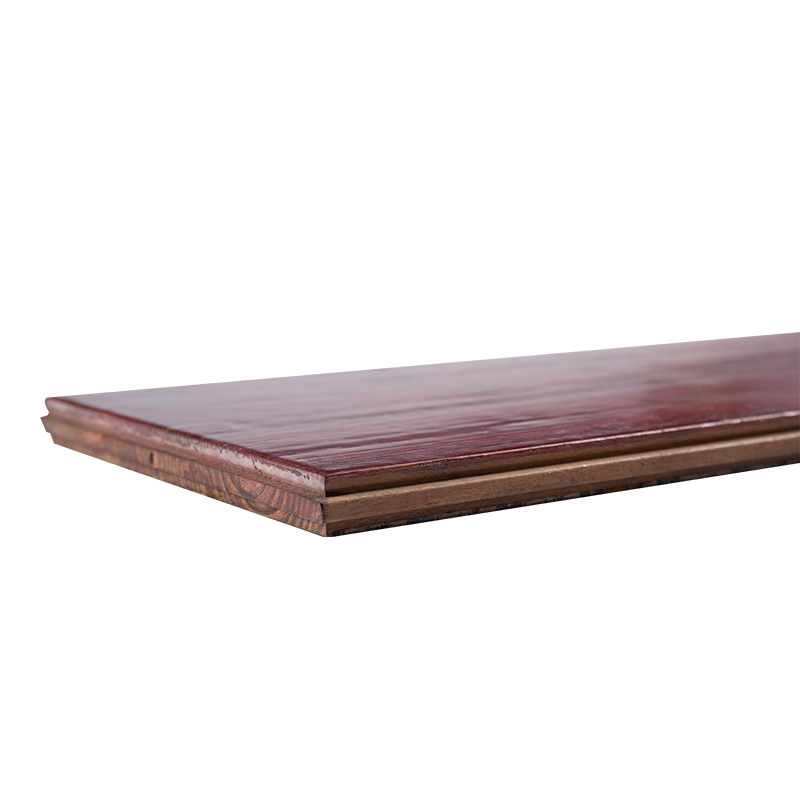
Wood is a natural material. Even engineered flooring, which includes a veneer of solid wood on a plywood or high-density core, inherits the inherent variation of timber. Different logs produce different color tones. Different forest locations yield different grain patterns. Climate conditions during growth affect wood density and appearance. A reputable manufacturer doesn't hide these variations—it manages them through disciplined processes.
Effective batch consistency management requires:
A manufacturing facility with 20,000 square meters of production space and annual capacity exceeding 2,400,000 square meters provides a foundation for reliable project delivery. This scale allows manufacturers to dedicate production lines to large orders without disrupting standard commercial output. For your project, this means:
Projects never follow simple timelines. A 36-month commercial development typically involves staggered floor completion: structural completion by floor, mechanical rough-in by section, finishing by phase. Your flooring delivery schedule must align with this reality.
Professional project supply management coordinates:
Project success depends on material specifications that align with design intent and performance requirements. A designer specifies flooring not just for appearance but for acoustic performance in an office environment, moisture resistance in a spa facility, slip resistance in a commercial kitchen, or fire rating compliance in a high-rise.
Different building types require different performance parameters. Consider these common scenarios:
| Project Type | Key Performance Requirements | Technical Specification Focus |
|---|---|---|
| Hotel or Hospitality | Acoustic isolation, durability under foot traffic, stain resistance | IIC rating, wear layer thickness, topcoat protection |
| Office Building | Acoustic absorption, fire rating compliance, dimensional stability | E1 emission rating, UL/EN fire classification, moisture barrier |
| Residential High-Rise | Impact sound control, radiant floor compatibility, dimensional stability | Thermal conductivity, expansion allowance, moisture tolerance |
| Commercial Retail | Durability, slip resistance, aesthetic consistency, maintenance ease | COF rating, finish hardness, grain uniformity specifications |
Architects and engineers require detailed technical files to integrate flooring specifications into construction documents. Professional project suppliers provide:
Modern projects increasingly incorporate sustainability criteria. Building certifications like LEED and BREEAM award points for materials sourced responsibly. Flooring products certified under FSC (Forest Stewardship Council) standards demonstrate responsible forestry practices. CE marking indicates compliance with European performance standards. CARB certification confirms adherence to formaldehyde emission limits.
When your project targets a green building certification, these credentials directly support your compliance strategy and can influence design decisions in favor of responsibly sourced engineered wood flooring.
Successful project delivery follows a structured process. Each phase presents distinct requirements and decision points where supplier support influences outcomes.
During the design and bidding phase, contractors and subcontractors need competitive pricing and clear specifications to prepare accurate bids. Project suppliers contribute by:
Before final approval, designers and contractors require physical samples. Professional suppliers maintain sample programs specifically for large projects:
The sample-to-production handoff requires documented approval. Retaining approved samples ensures that later shipments can be verified against the approved standard.
Wood flooring requires protective packaging. Moisture is the primary risk. Improper packaging allows humidity absorption, which causes dimensional instability and installation failure. Professional packaging includes:
Early delivery increases on-site storage costs and storage risks. Late delivery creates schedule pressure and can push installation into unfavorable seasonal conditions. Integrated logistics planning synchronizes supplier delivery with project progress.
Installation quality determines whether products perform as specified. Professional support includes:
Many installation problems arise from substrate issues rather than product defects. Proper guidance on substrate moisture testing, flatness verification, and preparation significantly reduces installation failures.
Project warranties typically extend 5-10 years. Suppliers should maintain:
Environmental responsibility extends beyond compliance. It reflects project values and influences stakeholder decisions.
FSC certification verifies that timber originates from forests managed according to rigorous sustainability standards. Certified forests maintain biodiversity, respect indigenous rights, and balance economic value with environmental protection. For project stakeholders, FSC certification demonstrates commitment to responsible resource management.
Adhesives and finishes used in wood flooring manufacturing release volatile organic compounds (VOCs). E1 emission ratings (or lower) indicate minimal formaldehyde release. CARB compliance confirms that engineered wood products meet California's strict emission standards—standards increasingly adopted in other jurisdictions. Specifying low-emission materials directly supports indoor air quality and occupant health.
Green building certification systems award points for sustainable material selections:
Sustainable flooring selections contribute to overall project certification goals while delivering performance benefits.
Durability extends project value across decades. Engineered wood flooring with adequate wear layers and proper maintenance can serve 20-30 years or more. Comparing initial cost against per-year cost of ownership reveals that higher-quality flooring often delivers better long-term value than budget alternatives. This calculus matters in projects where occupancy extends across multiple decades.
Evaluating project wood flooring solutions requires systematic comparison across multiple dimensions:
Lead time depends on order specifications and volume. For standard products in typical volumes (5,000-20,000 square meters), manufacturers typically require 20-30 days from order confirmation to shipment. Custom specifications or larger volumes may extend this to 40-45 days. Early planning and pre-production communication minimize delays. Rush orders are possible but usually incur additional costs. Always confirm lead times during the bidding phase, accounting for your project schedule and any contingency buffers.
Color consistency requires a multi-step process. First, during sampling, establish and document approved color standards through physical samples. Second, communicate to the manufacturer that you are a multi-phase project and request batch reservation. The manufacturer should reserve specific raw material lots for all phases of your order. Third, require batch numbers and production dates on all shipments, documented in delivery paperwork. Finally, retain approved sample sets on-site throughout the project, comparing subsequent deliveries against these retained standards before accepting shipment. Communication and documentation are key.
Yes. Professional project suppliers maintain comprehensive sample programs. Typical offerings include color samples in various grades, finish samples demonstrating topcoat appearance and durability, mock installation samples showing typical layout patterns, and performance test samples if specialized testing is required. Sample provision is standard practice and should be part of any project evaluation. Samples are typically provided at no cost for projects of significant volume. Ensure that approved samples are retained and properly stored for comparison during production and delivery verification.
Professional suppliers provide installation support at multiple levels. All products include detailed installation manuals covering substrate preparation, acclimation requirements, layout methods, and fastening procedures. Many suppliers provide video demonstrations in multiple languages. For complex projects—particularly commercial installations, multi-story buildings, or installations in challenging environmental conditions—suppliers often provide remote technical support accessible via phone or email during installation. For very large or complex projects, on-site technical visits can be arranged. Discuss technical support availability during the bidding phase.
Key certifications for responsible project flooring include FSC (Forest Stewardship Council), which verifies responsible forestry practices; CE marking, which confirms compliance with European performance standards; and CARB certification, which limits formaldehyde emissions. Products with these certifications support green building certification goals and demonstrate environmental responsibility. Environmental product declarations (EPDs) provide additional detail on lifecycle environmental impact. For projects targeting LEED, BREEAM, or other green certifications, verify that your flooring selections carry the relevant certifications needed to earn points toward your target rating.
Moisture protection is the primary packaging focus. Professional suppliers use moisture-barrier wrapping on both individual boxes and complete pallet loads. For long-distance or intercontinental shipments, climate-controlled shipping containers are often employed. Pallet configurations are designed to maximize truck utilization while protecting product from damage. Packaging documentation should include moisture indicators or monitoring devices, particularly for projects in humid climates or during high-humidity seasons. Upon arrival, inspect packaging integrity and document any damage immediately. Proper packaging significantly reduces moisture-related installation failures.
Warranty periods typically range from 5 to 10 years from the date of installation, depending on the product and supplier. Warranties generally cover manufacturing defects but exclude damage from improper installation, inadequate substrate preparation, or failure to follow maintenance requirements. To preserve warranty validity, follow the manufacturer's care and maintenance guidelines. Maintain documentation of installation dates and conditions. Warranty claims typically require inspection before remedy determination. Discuss warranty specifics and claims procedures during contract negotiation to ensure alignment with project expectations.
Radiant heating introduces thermal expansion stress that can cause flooring movement if not properly managed. Engineered wood flooring is more dimensionally stable than solid wood because the cross-grain plywood or high-density core resists movement. However, specifications must account for radiant heat. Key considerations include: ensuring the flooring is rated for radiant heat compatibility, maintaining proper acclimation periods before installation, using appropriate expansion allowances around perimeters and under fixed installations, and avoiding rapid temperature swings. Consult technical specifications and obtain installer guidance on radiant floor compatibility before finalizing specifications.
Batch consistency refers to ensuring that wood flooring from different production runs maintains uniform color, grain pattern, and finish appearance. Because wood is a natural material, timber from different logs or forest areas exhibits inherent variation. A "batch" is a production run using specific raw materials. For large projects installed in multiple phases, you want Phase One and Phase Eight to appear identical despite being produced months apart. Suppliers achieve this through careful log selection, batch-specific production scheduling, and color-matching against retained samples. This matters because visible differences between installation phases damage aesthetic consistency and create customer dissatisfaction.
Start by identifying your project's sustainability goals. If targeting LEED, BREEAM, or other green certification, review the certification system's flooring credit requirements. Prioritize products with FSC certification (responsible forestry), low VOC emissions (E1 rating or better), and environmental product declarations. Calculate lifecycle cost per year, comparing initial material cost against expected durability and maintenance requirements—often, sustainably sourced products offer better long-term value. Engage with your flooring supplier early to understand their sourcing practices, manufacturing environmental performance, and how their products support your certification targets. View sustainability as a value driver, not a cost burden.

We provide customers with sustainable and eco-friendly
engineered wood solutions and services.
Choose DEIF for the perfect blend of
performance and aesthetics.
