


 English
 Español
 عربى
عربى
Get Social
Choose DEIF for the perfect blend of
performance and aesthetics.
 Get Free Sample

Content
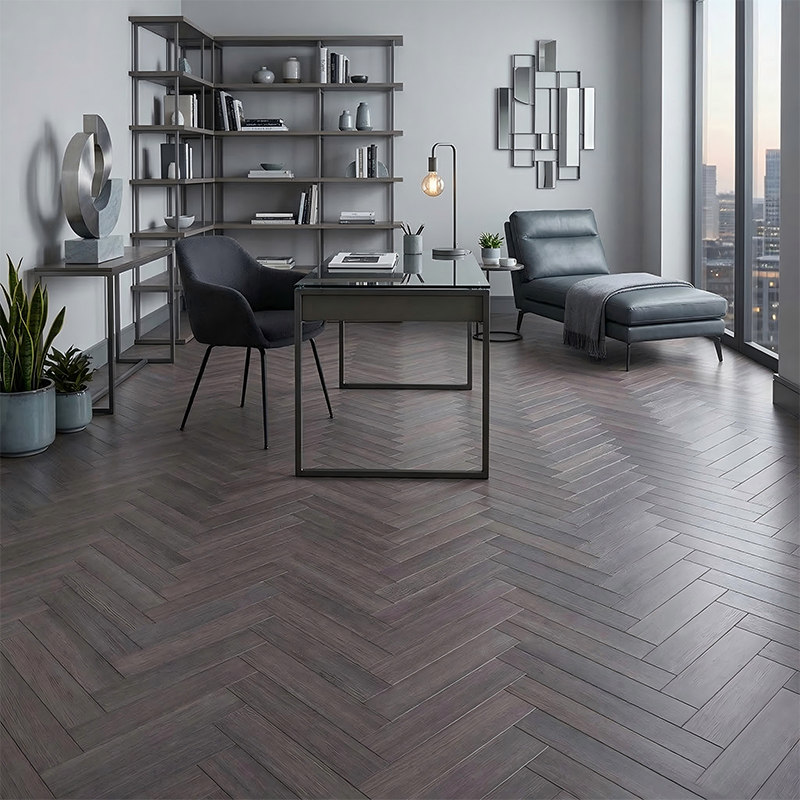
Chevron patterns represent one of the most sophisticated approaches to hardwood flooring design. Unlike conventional parallel-board installations, chevron parquet flooring demands exceptional precision in manufacturing. Every plank's end must be cut at exact angles—typically 45 degrees or 60 degrees—to create the signature continuous V-shaped flow that defines this aesthetic.
The appeal of chevron patterns extends beyond visual impact. The diagonal orientation of planks creates a powerful sense of movement and spatial extension, making rooms appear larger and more dynamic. This geometric precision, however, places extraordinary demands on the manufacturing process. A variance of even one degree can result in misaligned joints, broken patterns, and compromised installation quality.
Modern engineered chevron flooring combines the beauty of solid wood veneers with the dimensional stability of multilayer construction. This hybrid approach enables chevron patterns to thrive in challenging environments—including spaces with radiant floor heating—while maintaining the aesthetic integrity that makes chevron flooring a preferred choice for high-end residential and commercial projects worldwide.
The distinction between chevron and herringbone patterns often confuses specifiers and designers. While both create dynamic visual effects, their underlying geometry and installation requirements differ fundamentally. Understanding these differences is essential for selecting the right flooring for your project.
Chevron flooring features planks with ends cut at a specific angle—most commonly 45 degrees or 60 degrees. When installed, each row forms a continuous V-shaped pattern. The planks do not end at perpendicular lines; instead, they meet at angled junctions that create seamless directional flow.
Herringbone flooring employs 90-degree cuts, with each plank positioned perpendicular to the adjacent row. This creates the characteristic "brick-like" or zigzag appearance. While visually similar from a distance, herringbone's right-angle construction is fundamentally different from chevron's diagonal geometry.
Chevron's diagonal orientation creates a pronounced sense of directional movement. The continuous flow draws the eye along the room's length, effectively expanding the perceived space. This quality makes chevron particularly effective in residential settings where design impact matters.
Herringbone, while visually interesting, creates a more interrupted visual rhythm. The perpendicular transitions between rows produce a staccato effect rather than the fluid continuity of chevron patterns. For designers seeking a quieter, more restrained aesthetic, herringbone provides an excellent alternative.
The angle-cutting requirement of chevron flooring elevates manufacturing complexity significantly. Consider these critical factors:
Herringbone's 90-degree cuts are simpler to execute with standard woodworking equipment, making it more accessible for manufacturers with basic capabilities. Chevron, by contrast, demands specialized equipment and expert process control.
Chevron flooring's reputation rests entirely on manufacturing precision. A one-degree variance cascades through an entire room, creating visible gaps and compromising the integrity of the pattern. Understanding the manufacturing process reveals why chevron commands premium pricing and why process expertise matters so profoundly.
Modern chevron manufacturing relies on Computer Numerical Control (CNC) technology to achieve the angular precision that hand tools cannot match. These automated systems operate with tolerances of plus-or-minus 0.1 degrees—a standard that ensures every plank end meets exact specifications.
The cutting process involves multiple stages. First, rough lumber is sorted and dimensioned to target widths. Planks then move to specialized angle-cutting equipment where both ends are cut simultaneously at the precise angle—45 or 60 degrees depending on the design specification. Computer feedback systems monitor each cut and make real-time adjustments to maintain consistency across production runs.
Solid chevron flooring, while beautiful, presents dimensional stability challenges. Wood naturally expands and contracts with seasonal humidity fluctuations. In a chevron pattern, this movement can disrupt the carefully aligned angles, causing planks to separate or warp.
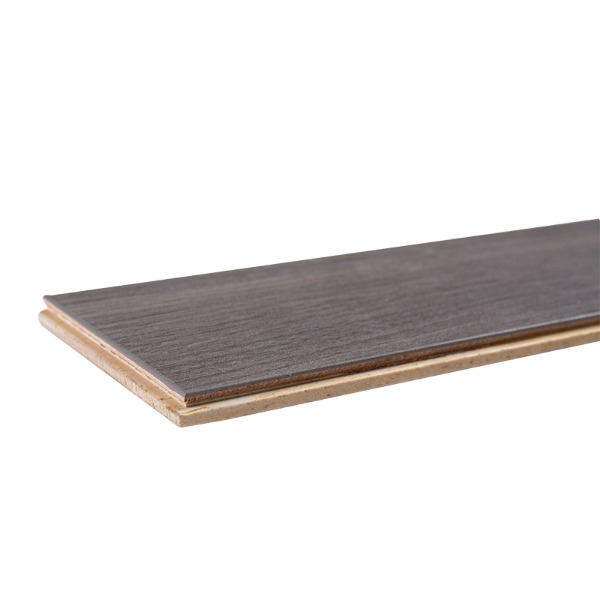
Engineered chevron flooring solves this problem through multilayer construction. A typical engineered chevron plank consists of:
| Layer | Material | Purpose |
|---|---|---|
| Top (Wear layer) | Real wood veneer (3-6mm) | Aesthetic appeal, durability |
| Middle layers | Cross-laminated plywood | Dimensional stability, strength |
| Bottom (Balance layer) | Hardwood backing | Moisture regulation, flatness |
This cross-laminated structure works as a stress-management system. The alternating grain directions in each layer counteract wood movement, preventing the cupping, crowning, or separation that can occur in solid constructions. In spaces with radiant floor heating or fluctuating humidity, this stability advantage becomes critical.
The final step in chevron manufacturing involves surface preparation and finishing. Multiple options serve different project requirements:
Selecting a chevron flooring partner requires confidence in their manufacturing capacity, quality systems, and reliability. Large-scale manufacturers with proven expertise provide advantages that smaller operations cannot match.
Professional chevron manufacturing facilities operate with substantial infrastructure investment. This includes:
A single production facility supporting chevron flooring typically spans 20,000+ square meters. This scale enables simultaneous execution of multiple production stages—drying, milling, cutting, lamination, finishing—maintaining consistent output.
Professional chevron manufacturers implement multi-stage quality control. A typical system includes:
This systematic approach ensures that the precision demanded by chevron patterns meets specification consistently across production runs and shipments.
Standard chevron flooring typically supports annual production capacity in the range of 2-3 million square meters, depending on factory size and product mix. Most facilities maintain standard inventory of popular specifications—45 and 60-degree chevron, common wood species, standard finishes—enabling rapid order fulfillment.
Standard orders typically ship within 15-20 days of order placement. Custom specifications—unusual angle configurations, exotic wood species, specialized finishes—extend this timeline proportionally. Rush orders may incur premiums but can accelerate delivery in urgent situations.
The two standard chevron angles—45 and 60 degrees—serve different aesthetic and practical purposes. Understanding their distinct characteristics guides selection for specific projects.
Forty-five-degree chevron represents the most frequently specified angle for residential and hospitality applications. This configuration creates balanced visual symmetry with several practical advantages.
At 45 degrees, chevron planks create a perfect mathematical relationship with rectangular rooms. The angle aligns naturally with room diagonals, creating a sense of optical harmony. Visually, 45-degree chevron delivers a moderate sense of directional flow—dynamic enough to create visual interest without overwhelming spatial geometry.
From a manufacturing perspective, 45 degrees has become standardized across the industry, meaning the widest range of equipment and suppliers support this specification. This competitive market dynamic typically results in competitive pricing without sacrificing quality.
Sixty-degree chevron creates a more dramatic visual effect. The sharper angle intensifies the sense of directional movement and spatial extension. This specification appeals to contemporary design applications seeking visual boldness and high-end residential projects where distinctive aesthetics command premium pricing.
The steeper angle creates taller V-shapes in the pattern. Viewed from room corners or oblique angles, 60-degree chevron produces greater visual complexity and dynamic optical effect compared to its 45-degree counterpart. This quality makes 60-degree patterns particularly effective in large spaces where visual interest from distance matters.
Manufacturing 60-degree chevron requires greater precision on angle cuts. The acute angle creates more pronounced wood grain exposure at plank ends, making surface quality more visible. Consequently, material selection and finishing standards must be elevated for 60-degree specifications.
| Selection Factor | 45-Degree Recommendation | 60-Degree Recommendation |
|---|---|---|
| Square/rectangular rooms | Preferred | Optional |
| Contemporary design | Suitable | Preferred |
| Large open spaces | Adequate | Recommended |
| Budget-conscious projects | Preferred | Premium pricing |
| Rustic aesthetic | Preferred | Suitable |
| Custom specifications | Standard availability | Standard availability |
Chevron patterns must adapt to diverse installation environments, including spaces with radiant floor heating, high humidity, and significant temperature fluctuations. Engineered construction specifically addresses these environmental challenges.
Radiant heating systems—whether water-based hydronic or electric—present challenges for traditional solid hardwood. Heat conductivity and wood movement create potential problems. Engineered chevron flooring specifically accommodates these demands.
The multilayer construction of engineered chevron limits vertical wood movement because plies are cross-laminated and have opposing grain directions. This structure allows heat transmission while preventing cupping or warping that would compromise the chevron pattern's visual continuity.
For radiant heating installations, ensure the subfloor system is complete and tested before flooring installation. Flooring should be acclimated to normal room conditions for at least 48 hours before installation, and radiant heating systems should be operated gradually during acclimation to equilibrate wood moisture content gradually.
Wood naturally responds to relative humidity fluctuations. Ideal interior conditions maintain humidity between 35-55 percent. In dry winter climates with forced-air heating or humid summer environments, this natural response becomes pronounced.
Engineered chevron flooring minimizes but does not eliminate this response. Compared to solid chevron, engineered construction reduces wood movement by approximately 50-70 percent through the multilayer structure. This improvement, combined with proper interior humidity management, allows chevron patterns to remain visually intact across seasonal cycles.
Installation practices support environmental adaptation. Leaving consistent 1/2-inch expansion space around room perimeters allows for seasonal wood expansion without buckling. Maintaining stable humidity through humidification in dry seasons and dehumidification in humid seasons protects flooring investment.
Chevron patterns showcase different wood characteristics depending on species selection. Premium species selection combined with chevron geometry creates visual richness unattainable with other flooring patterns.
Each species imparts distinct visual character to chevron patterns. Species selection should align with overall interior design direction while considering durability requirements for the intended use.
Beyond standard chevron flooring specifications, manufacturers offer customization services addressing specific project requirements. This flexibility enables designers and specifiers to develop distinctive aesthetic solutions.
Custom chevron projects typically address:
Distributors and brand companies can commission chevron parquet flooring production under proprietary branding. OEM (Original Equipment Manufacturing) and ODM (Original Design Manufacturing) services enable:
Chevron flooring for export markets requires compliance with regional standards. Common certifications include:
Reputable manufacturers maintain these certifications, ensuring products meet international standards for safety, environmental responsibility, and performance.
Chevron pattern success depends not only on manufacturing precision but also on proper installation. Specific installation practices ensure the geometric precision of manufacturing is preserved in the finished floor.
Before chevron installation begins, several preparatory steps ensure success:
Chevron installation typically employs three primary methods:
Chevron installation complexity demands skilled labor. Professional installers understand:
DIY installation of chevron flooring is not recommended. The geometric precision requirements exceed typical homeowner capabilities, resulting in pattern misalignment and compromised final appearance.
Chevron flooring maintenance follows general hardwood flooring principles, with emphasis on environmental consistency that preserves the geometric integrity of the pattern.
Preserve chevron flooring aesthetic through protective practices:
High-quality chevron flooring can be refinished after 7-10 years of residential use or as traffic conditions warrant. Professional refinishing restores appearance and extends floor life significantly. However, due to the angled geometry of chevron patterns, refinishing requires specialized expertise. Sand-and-finish operations must maintain angle consistency at plank ends to preserve pattern integrity.
The fundamental difference lies in angle geometry. Chevron features angled end cuts (typically 45 or 60 degrees), creating continuous V-shaped patterns when installed. Herringbone uses 90-degree right-angle cuts, creating a perpendicular brick-like pattern. Chevron produces stronger directional flow and visual continuity, while herringbone creates a more interrupted, staccato rhythm.
Yes, engineered chevron specifically addresses radiant heating challenges. The cross-laminated multilayer construction limits wood movement that would disrupt solid chevron patterns. This stability, combined with proper acclimation procedures, allows engineered chevron to perform reliably in heated floor applications. Consult with manufacturers regarding specific thermal requirements for your radiant system.
Standard chevron angles are 45 degrees and 60 degrees. The 45-degree angle is more widely available and typically less expensive, with better alignment to rectangular rooms. Sixty-degree chevron creates more dramatic visual impact and dynamic flow effect. Custom angles outside these standards are possible but require special manufacturing arrangements.
Pattern continuity depends on three factors: manufacturing precision of angle cuts, correct left/right plank pairing during installation, and skilled installer execution. Choose manufacturers with rigorous quality control systems. Verify that flooring is delivered in matched pairs. Hire experienced installers familiar with chevron installation requirements. Professional installation is strongly recommended.
Popular choices include white oak (versatile, prominent grain), black walnut (premium, dramatic character), ash (light, contemporary), and European oak (refined, tight grain). Species selection depends on design direction and durability requirements. Harder species (above 1000 Janka hardness) perform better in high-traffic commercial applications. Discuss species options with manufacturers for specific project requirements.
Chevron installation is not recommended for DIY execution. The geometric precision required—ensuring angle alignment across multiple planks, managing left/right plank sequencing, maintaining pattern continuity across room dimensions—exceeds typical homeowner capabilities. Professional installation ensures pattern integrity and appropriate warranty protection.
Chevron flooring typically costs 20-40 percent more than standard parallel-plank hardwood due to manufacturing complexity, precision requirements, and specialized installation labor. Engineered chevron is generally less expensive than solid chevron due to material efficiency, while 60-degree chevron commands premiums over standard 45-degree options due to increased manufacturing demands.
Common factory finishes include UV oil (penetrating, natural appearance, requires maintenance), UV lacquer (polyurethane-based, durable, low-maintenance), wire-brushed texture (enhances grain character), hand-scraped finish (rustic appearance), and smoke-treated (aged aesthetic). Specialized finishes including matte, satin, and gloss options are available from most manufacturers.
Yes, chevron flooring is used in hospitality, retail, and commercial office applications. High-traffic commercial installations typically specify engineered chevron with premium finishes and harder wood species. Installation method shifts from floating to glue-down or mechanical fastening for maximum durability. Maintenance protocols must align with commercial cleaning requirements.
Optimal conditions maintain interior humidity between 35-55 percent and temperatures between 60-80 degrees Fahrenheit. Avoid extreme humidity fluctuations, direct sunlight exposure, and temperature swings that cause excessive wood movement. Engineered chevron is more forgiving than solid chevron but still benefits from stable environmental conditions that preserve dimensional integrity and visual appearance.

We provide customers with sustainable and eco-friendly
engineered wood solutions and services.
Choose DEIF for the perfect blend of
performance and aesthetics.
