


 English
 Español
 عربى
عربى
Get Social
Choose DEIF for the perfect blend of
performance and aesthetics.
 Get Free Sample

Content
In the evolving world of interior flooring, few products have managed to maintain relevance across both residential and light-commercial sectors quite like 12mm commercial laminate flooring. While luxury vinyl and engineered hardwood capture headlines with their waterproof claims and refinishable surfaces, the 12mm laminate segment quietly continues to dominate a significant portion of the market — and for good reason.
What makes this thickness category particularly compelling is its ability to deliver a convincing wood aesthetic without the maintenance demands of natural timber, all while offering acoustic performance that thinner alternatives simply cannot match. For property owners, facility managers, and renovation professionals alike, understanding where 12mm laminate flooring fits within the broader flooring ecosystem has become increasingly important as material options proliferate.
The thickness of a laminate plank is not merely a cosmetic specification — it fundamentally influences how the floor performs across multiple dimensions. While entry-level products at 7mm or 8mm remain available at lower price points, the performance gap between these and 12mm commercial laminate flooring is substantial enough to warrant serious consideration.
The most immediately noticeable difference between 12mm and thinner laminates is acoustic performance. A 12mm plank absorbs foot-impact noise far more effectively than its thinner counterparts, reducing the hollow, clicking sound that often plagues budget laminate installations. This makes 12mm commercial laminate flooring particularly well-suited for multi-story residential buildings, apartment conversions, and office environments where noise transmission between floors is a concern.
The improved acoustic profile stems from both the increased mass of the board and the enhanced ability of thicker cores to dampen vibration. For projects above ground level where sound mitigation is a priority, this characteristic alone often justifies the material cost differential.
Perhaps the most practical advantage of 12mm commercial laminate flooring lies in its ability to bridge minor subfloor imperfections. Where thinner 7mm or 8mm planks will telegraph every undulation and dip, a 12mm board offers sufficient rigidity to smooth over minor irregularities. This becomes particularly relevant in older buildings where concrete slabs or wood subfloors have settled unevenly over decades of use.
This forgiveness does not eliminate the need for proper subfloor preparation — flatness standards still apply — but it does provide installers with a more forgiving substrate interface. Projects with budget constraints that prevent extensive self-leveling work may find 12mm commercial laminate flooring a more practical solution than engineered wood or thinner laminate options.
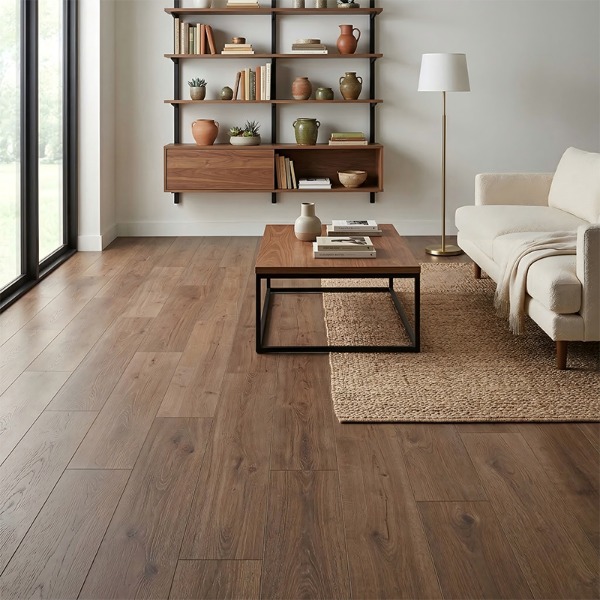
While thickness serves as an important indicator of overall quality, responsible specifiers should evaluate several additional parameters when selecting 12mm commercial laminate flooring. These specifications determine longevity, maintenance requirements, and suitability for specific traffic conditions.
The Abrasion Class rating system provides a standardized measure of surface wear resistance. For residential main floors, AC3 represents the minimum acceptable threshold, while AC4 offers enhanced durability for hallways, kitchens, and light-commercial environments. AC5 grades are reserved for heavy commercial and retail applications. Most 12mm commercial laminate flooring products on the market carry AC3 or AC4 ratings, but verifying the specific rating for your chosen product remains essential — thickness alone provides no guarantee of scratch or scuff resistance.
The wear layer on laminate flooring consists of an aluminum-oxide-impregnated overlay that protects the decorative print layer from abrasion. Thickness typically ranges from 0.3mm to 0.6mm, with thicker layers offering extended finish life. When evaluating 12mm commercial laminate flooring, specifying a product with a 0.5mm or thicker wear layer can significantly improve long-term appearance retention, particularly in higher-traffic zones.
Many 12mm products now incorporate pre-attached foam or cork underlayment, adding 2–3mm of sound-dampening material while simplifying installation logistics. Products without integrated underlay require separate underlayment purchase and installation, adding approximately $0.30–$0.60 per square foot to project costs. While pre-attached underlay offers convenience, projects with stringent acoustic requirements may benefit from upgrading to high-performance acoustic underlayment, an option only available with non-attached products.
A distinction worthy of careful attention involves water resistance terminology. Standard 12mm laminate is water-resistant — surface spills that are promptly wiped up cause no damage. Waterproof-core laminate offers a higher level of protection, with sealed cores providing up to 72 hours of protection against standing water. However, even waterproof-core products are not suitable for areas with consistent moisture exposure. This represents a fundamental limitation of laminate flooring across all thickness grades, and one that projects involving wet environments must address through alternative product selection.
To make an informed decision, evaluating 12mm commercial laminate flooring against other popular flooring categories is essential. The following comparison examines installed costs, moisture tolerance, durability, and appropriate applications for each category, excluding specific brand references in favor of general performance characteristics.
| Flooring Category | Installed Cost Range | Moisture Tolerance | Typical Lifespan | Primary Applications | Avoid in |
|---|---|---|---|---|---|
| 12mm Laminate | Moderate | Water-resistant (72hr with sealed core) | 15–25 years (AC3–AC4) | Living areas, bedrooms, light-commercial | Basements, bathrooms, laundry rooms |
| 5mm SPC/LVP Vinyl | Low–Moderate | 100% waterproof | 20–30 years | Basements, kitchens, wet areas, full-home | High-heat direct sun areas |
| Engineered Hardwood | High | Moisture-sensitive | 30–50 years (refinishable) | Main floors, open-plan living | Below-grade, wet areas |
| Solid Hardwood | Very High | Expands/contracts with humidity | 50–80 years (refinishable) | Above-grade, climate-controlled spaces | Basements, radiant heat, kitchens |
| 8mm Laminate | Low | Water-resistant only | 10–15 years (AC2–AC3) | Low-traffic bedrooms, rental units | High traffic, uneven subfloors |
The decision framework simplifies to this: if waterproofing is the primary requirement, vinyl flooring alternatives consistently outperform laminate. If authenticity of wood texture and long-term refinishability are priorities, engineered hardwood delivers superior value. 12mm commercial laminate flooring earns its position when the project requires cost-effective wood aesthetics, solid underfoot feel, and noise reduction, all within a moisture-controlled, above-grade environment.
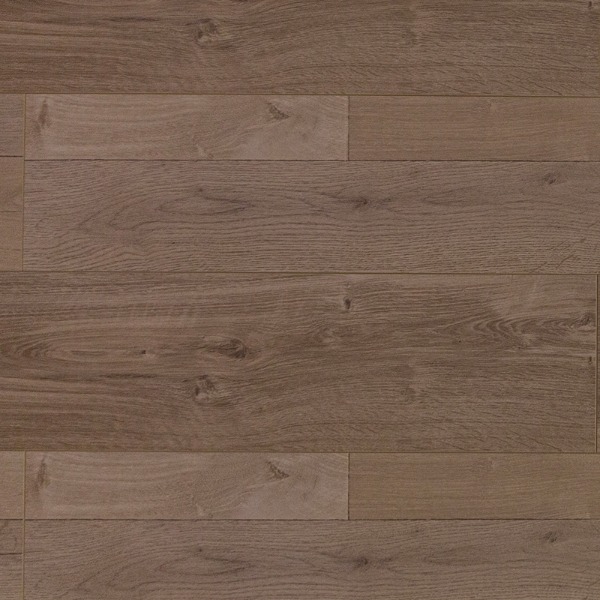
Residential living spaces represent the traditional stronghold for 12mm laminate, with open-plan living rooms, dining areas, and hallways benefiting from its acoustic and aesthetic qualities. In multi-story homes, the sound-absorbing properties of 12mm planks reduce inter-floor noise transmission, a consideration that grows in importance as open-concept floor plans continue to dominate new construction.
Second-floor bedrooms and corridors similarly benefit from the acoustic advantages of thicker laminate, with reduced footfall noise improving occupant comfort in occupied spaces below. The improved subfloor forgiveness also proves valuable when installing over wood-framed construction, where minor joist movement or settling over time may have created subtle variations in floor flatness.
Rental units with budget-conscious renovation requirements benefit from 12mm commercial laminate flooring’s balance of durability and cost. The enhanced wear resistance of AC4-rated products, combined with the thicker construction that reduces visible damage from dropped objects or furniture movement, makes this category a practical choice for property owners seeking lasting value without premium material costs.
Pet-inclusive homes represent another application where 12mm commercial laminate flooring performs admirably. AC4-rated surfaces resist scratching from animal nails more effectively than thinner alternatives, while the thicker core reduces noise from animal movement, a detail that consistently receives positive feedback from occupants.
Basement installations remain the single most common misapplication of 12mm laminate. Concrete slabs in contact with earth emit moisture vapor year-round, and even waterproof-core laminate products remain vulnerable to wicking moisture over extended periods. For below-grade applications, SPC vinyl or luxury vinyl plank with inherent waterproof properties and dimensional stability represents the appropriate choice.
Bathrooms and laundry rooms present moisture levels that exceed even waterproof-core laminate capabilities. Consistent standing water, splashing, and humidity fluctuations accelerate joint swelling and core degradation, making vinyl or ceramic tile more suitable options for these environments.
High-heat sunrooms with significant south or west-facing glazing create conditions where laminate can experience thermal stress and UV degradation. Products with specialized UV-inhibiting wear layers or vinyl alternatives with superior heat stability perform more reliably in these settings.
Commercial applications above moderate traffic levels — such as retail spaces, restaurant dining areas, or office reception zones — require products specifically rated for commercial use. While AC5-rated laminate exists, the category overall faces competition from more durable commercial vinyl and rubber flooring products designed specifically for heavy-traffic environments.
While 12mm commercial laminate flooring offers a floating-floor installation method that eliminates adhesive or fastener requirements, several non-negotiable preparation steps determine long-term performance. Project managers and installers should verify adherence to the following requirements to avoid warranty invalidation or premature failure.
Manufacturers typically specify a tolerance of 3/16 inch within any 10-foot radius. High points must be ground down, while low spots require filling with appropriate self-leveling compound. This preparation step is particularly critical when 12mm commercial laminate flooring is selected specifically for its subfloor forgiveness — the product will bridge minor irregularities but cannot compensate for significant flatness issues.
Relative humidity readings must fall below 75% for most laminate products, with some manufacturers accepting up to 80%. Testing should employ calcium chloride or RH probe methods, with results verified before product procurement. Projects on concrete slabs in older buildings should budget for potential remediation work, including vapor barrier installation or moisture mitigation systems where necessary.
Laminate flooring requires 48 to 72 hours of acclimation in the installation environment at target temperature conditions of 18–22°C. This step cannot be abbreviated, particularly in climates with cold winters where products may arrive from unheated delivery vehicles or storage facilities at significantly lower temperatures. Acclimation allows the core material to reach equilibrium moisture content, reducing expansion and contraction after installation.
All floating floors require expansion gaps at walls, door frames, and fixed objects to accommodate seasonal expansion and contraction. Standard requirements specify 10–12mm gaps, which are subsequently covered by baseboard or quarter-round moldings. In climates with significant seasonal temperature and humidity variation, expansion gap provision becomes particularly critical. Seasonal temperature swings, such as those experienced in continental climates with winter temperatures dropping to -15°C and summer highs exceeding 35°C with high humidity, create substantial dimensional changes in laminate flooring. Installers who reduce or omit expansion gaps risk buckling within two seasonal cycles.
Laminate installations on stairs require specialized nosing profiles to provide secure, safe transitions. These profiles must be selected to match product thickness and color, adding specific material and labor costs to stair projects.
A structured decision-making process helps project specifiers select the appropriate flooring category. Consider the following conditions for each option:
Select 12mm commercial laminate flooring when:
Select vinyl flooring when:
Select engineered hardwood when:
Yes, provided the product carries an AC4 rating or higher. AC4-rated 12mm commercial laminate flooring handles hallways, entryways, and open-plan living spaces in active households. AC3 remains sufficient for bedrooms and low-traffic rooms. Always confirm the AC rating — thickness alone does not determine abrasion resistance.
Yes, but with important conditions. The concrete must pass moisture testing with relative humidity below 75%, the slab surface must be flattened to within 3/16 inch per 10 feet, and a moisture barrier underlayment is required. For below-grade concrete slabs, vinyl flooring alternatives are strongly recommended instead.
Standard 12mm laminate is water-resistant, meaning surface spills wiped up promptly cause no damage. Waterproof-core laminate uses a sealed HDF core providing 72-hour waterproof protection — spills cleaned within 72 hours will not penetrate to the core. Neither product is suitable for wet rooms or areas with standing water.
If the selected planks do not include pre-attached underlayment, separate underlayment installation is required. Foam underlayment serves over wood subfloors, while combination moisture-barrier/foam products are necessary over concrete. Pre-attached underlay offers convenience but limits ability to upgrade to higher-performance acoustic products.
Acclimation time and expansion gap provision rank as the most commonly neglected installation requirements. Failing to allow adequate acclimation in cold delivery conditions produces later dimensional instability. Insufficient expansion gaps cause buckling during seasonal humidity swings — a failure mode frequently observed in climates with extreme seasonal temperature variation.
12mm commercial laminate flooring continues to occupy a legitimate position within the flooring market, delivering meaningful performance advantages over thinner alternatives while remaining accessible from a budget perspective. Its acoustic insulation, subfloor tolerance, and durability — when paired with appropriate AC ratings — suit a wide range of residential and light-commercial applications.
Nevertheless, the category has clear boundaries. Projects involving basements, wet areas, or heavy commercial traffic should pursue alternative products better matched to those conditions. The responsible specifier considers moisture exposure, traffic patterns, and acoustic requirements together when selecting between 12mm commercial laminate flooring, vinyl flooring, and engineered hardwood.
Ultimately, 12mm laminate represents a balanced solution — one that does not claim to be the best flooring for every scenario but excels in its appropriate application. For above-grade projects requiring wood aesthetics, solid underfoot feel, and cost-conscious material selection, it remains a decision worthy of serious consideration.

We provide customers with sustainable and eco-friendly
engineered wood solutions and services.
Choose DEIF for the perfect blend of
performance and aesthetics.
