


 English
 Español
 عربى
عربى
Get Social
Choose DEIF for the perfect blend of
performance and aesthetics.
 Get Free Sample

Content
Herringbone parquet flooring represents one of the most sophisticated and timeless flooring solutions available today. This distinctive pattern, characterized by rectangular wood blocks arranged in a distinctive V-shaped weaving pattern, combines aesthetic elegance with functional durability. The herringbone parquet pattern has been a hallmark of luxury interior design for centuries, originally popularized in European palaces and estates.
The term "herringbone" derives from the visual resemblance to the skeletal structure of herring fish. When arranged properly, each block creates a diagonal line that alternates direction, forming the characteristic zigzag pattern that immediately elevates any interior space. This herringbone parquet wood flooring style differs fundamentally from standard straight-lay installations, requiring more precise cutting, measurement, and installation expertise.
Understanding the cost structure of herringbone parquet flooring requires knowledge of multiple factors: material selection, labor intensity, room dimensions, and design complexity. This comprehensive guide provides actionable insights into pricing, installation considerations, and design trends that influence your investment decision.
The primary expense in herringbone parquet installation comes from the wood material itself. Prices vary substantially based on wood species selection and quality grade. Budget-conscious homeowners might consider engineered herringbone solutions, which range from $4 to $8 per square foot. These products offer dimensional stability superior to solid wood in moisture-prone environments.
Solid wood oak herringbone parquet flooring typically costs between $6 and $15 per square foot. Premium hardwoods like walnut, maple, or exotic species can exceed $20 per square foot. Wide plank herringbone flooring, increasingly popular in modern design schemes, commands a premium of approximately 20 to 40 percent above standard widths.
Installation represents the second major cost component. Herringbone pattern installation demands significantly more labor than conventional flooring. Professional installers typically charge between $8 and $20 per square foot for labor, depending on geographic location, subfloor condition, and pattern complexity.
The increased labor cost reflects several factors: the time required for precise angle cuts, the skill necessary to maintain consistent pattern alignment, and the waste factor inherent in herringbone installation. Pattern waste typically ranges from 5 to 15 percent, requiring material purchase above calculated square footage.
Beyond material and direct labor, several ancillary expenses merit consideration. Subfloor preparation and leveling might cost $2 to $5 per square foot. Removal of existing flooring typically ranges from $1 to $3 per square foot. Underlayment installation, recommended for moisture protection and acoustic properties, adds $0.50 to $2 per square foot.
The selection of wood species fundamentally determines both the aesthetic outcome and the financial investment. Different species possess distinct characteristics affecting durability, appearance, and price point.
| Wood Species | Price Range | Durability Rating | Appearance |
|---|---|---|---|
| Oak | $6-$15 per sq ft | Moderate-High | Classic grain pattern |
| Maple | $8-$18 per sq ft | Very High | Light, uniform tone |
| Walnut | $12-$20 per sq ft | High | Dark, sophisticated |
| Exotic Hardwoods | $18-$30+ per sq ft | Very High | Unique, distinctive |
Oak represents the most popular choice for residential herringbone installations, offering an optimal balance between aesthetic appeal and financial accessibility. Both red oak and white oak varieties provide excellent durability characteristics. Red oak features more pronounced grain patterns and typically costs slightly less than white oak. White oak offers superior moisture resistance and a more subtle grain structure, making it ideal for kitchens and bathrooms.
Homeowners seeking distinctive aesthetics increasingly select premium hardwoods. Walnut provides a rich, dark appearance that commands attention and conveys sophistication. Maple offers light, clean aesthetics suitable for contemporary and Scandinavian design schemes. Exotic species like cumaru, tigerwood, and Brazilian cherry provide unparalleled visual impact but require careful consideration of cost-benefit ratios and environmental sourcing practices.
Pattern complexity directly influences installation time and material waste, consequently affecting total project cost. Understanding different design approaches helps optimize both aesthetic outcomes and financial planning.
The traditional herringbone arrangement features rectangular blocks positioned at 45-degree angles to the wall. This classic design maximizes visual impact while maintaining relatively straightforward installation compared to more complex patterns. Labor costs for classic herringbone typically range from $8 to $12 per square foot.
A critical distinction exists between chevron and herringbone patterns. Chevron features V-shaped arrangements where blocks meet at precise angles without gaps, creating a sharper, more contemporary appearance. Herringbone features blocks arranged with consistent offsets, creating the traditional zigzag pattern. Chevron installations typically demand more precision and increase labor costs by 15 to 25 percent compared to herringbone, often reaching $12 to $18 per square foot. This increased cost reflects the cutting precision required to achieve seamless V-shaped transitions.
Wide plank designs, typically featuring blocks 5 to 12 inches in width, have gained considerable popularity in modern parquet flooring design. These installations command premium pricing both in material cost and labor requirements. Material costs increase by 20 to 40 percent, while labor costs may rise 10 to 20 percent due to the challenge of maintaining pattern consistency with larger blocks.
Custom herringbone solutions offer unlimited design possibilities but require proportionally higher investment. Bespoke designs incorporating mixed wood species, inlaid borders, and intricate medallions can cost $25 to $50 per square foot or more. These projects demand specialized installation expertise and typically extend project timelines significantly.
Subfloor quality significantly impacts total project cost. Concrete subfloors require moisture barriers and additional preparation steps, potentially adding $2 to $4 per square foot. Existing hardwood floors that require removal incur disposal costs and additional labor. Floor leveling for uneven surfaces demands specialized equipment and expertise, typically costing $3 to $8 per square foot depending on deviation severity.
Larger installations benefit from economies of scale, reducing per-square-foot labor costs. Conversely, small rooms with numerous doorways, closets, and irregular boundaries increase installation complexity and waste. A 200-square-foot bedroom might support lower per-square-foot costs compared to a 150-square-foot bathroom with multiple transitions and architectural features.
Geographic variation significantly influences labor pricing. Metropolitan areas typically command 30 to 50 percent higher labor rates than rural regions. Installer specialization also matters considerably. Highly experienced specialists in herringbone installation might charge premium rates but deliver superior results with minimal waste and faster completion times, potentially offsetting higher labor costs through reduced material waste and fewer callbacks.
Kitchens, bathrooms, and basements require specialized moisture management approaches. These environments demand engineered herringbone solutions or solid wood with robust moisture barriers. Moisture mitigation systems, including vapor barriers and ventilation improvements, can add $1 to $3 per square foot to project costs but prove essential for long-term durability and warranty protection.
Understanding how different variables combine to determine total project cost helps homeowners develop realistic budgets.
Consider a modest guest bedroom renovation. Material cost with mid-range oak herringbone at $9 per square foot equals $1,350. Installation labor at $10 per square foot totals $1,500. Subfloor preparation at $2 per square foot adds $300. Underlayment at $1.50 per square foot contributes $225. Adding waste contingency of 10 percent to materials and miscellaneous supplies of $200 yields a total project cost of approximately $3,850, representing an average cost per square foot of $25.67.
A master bedroom and hallway installation demonstrates different cost dynamics. Material at $11 per square foot totals $4,400. Labor at $12 per square foot equals $4,800. Subfloor preparation at $2 per square foot costs $800. Underlayment at $1.25 per square foot adds $500. Adding 10 percent waste and miscellaneous expenses of $300 produces a total of approximately $11,400, averaging $28.50 per square foot. The slightly higher per-square-foot cost compared to the small project reflects geometric complexity, but economies of scale provide modest per-unit savings.
An open-concept living area showcasing wide plank herringbone demonstrates premium project economics. Material at $16 per square foot totals $16,000. Labor at $14 per square foot equals $14,000. Subfloor preparation at $1.50 per square foot costs $1,500. Underlayment at $1 per square foot adds $1,000. Adding 8 percent waste and miscellaneous supplies of $400 yields approximately $34,200, averaging $34.20 per square foot. Larger installations benefit from reduced per-unit labor costs and slightly lower waste percentages.
Contemporary design approaches continue evolving herringbone aesthetics while influencing project economics.
Modern parquet flooring increasingly incorporates multiple wood species within single installations. These designs create visual contrast and sophisticated aesthetic depth. Mixed-species projects typically cost 15 to 30 percent more than single-species installations due to increased material sourcing complexity and installation labor requirements.
Contemporary preferences favor matte and natural oil finishes over high-gloss polyurethane applications. These finishes cost slightly less during installation but may require more frequent maintenance. Matte finishes reduce installation complexity slightly, potentially saving $1 to $2 per square foot in labor costs.
The trend toward wider planks continues influencing parquet flooring economics. Wide plank herringbone flooring featuring 8 to 10-inch widths represents increasingly popular choices in contemporary design schemes. These installations command 20 to 40 percent material premiums and 10 to 20 percent labor increases compared to standard widths.
Engineered herringbone products have gained considerable market traction in recent years. These pre-assembled units reduce installation labor significantly, typically by 30 to 50 percent. While engineered solutions cost slightly less per square foot in materials ($5 to $10), the labor savings create comparable total project costs when considering simpler installation requirements and reduced waste.
Understanding long-term performance justifies herringbone parquet flooring investment.
Quality herringbone parquet flooring typically lasts 25 to 30 years with proper maintenance, potentially extending to 40 years with exceptional care. Solid wood floors can be refinished multiple times, effectively extending lifespan indefinitely. Engineered options typically last 15 to 25 years before replacement becomes necessary. Annual maintenance costs typically range from $100 to $300, significantly less than alternative flooring options requiring replacement.
A solid wood herringbone installation costing $10,000 for 400 square feet, lasting 30 years with reasonable maintenance, calculates to approximately $333 annually. Including maintenance and minor repairs averaging $150 annually produces total annual cost of $483, or approximately $1.21 per square foot yearly. This comparison favorably positions premium hardwood flooring against carpet replacement cycles typically occurring every 7 to 10 years.
One of herringbone parquet flooring's significant advantages involves refinishing capability. Professional refinishing typically costs $3 to $5 per square foot, allowing restoration of worn surfaces without complete replacement. This restoration potential provides exceptional long-term value compared to laminate or vinyl alternatives requiring replacement rather than refinishing.
Quality herringbone parquet flooring typically increases residential property value by 3 to 5 percent. A $300,000 home investment of $15,000 in herringbone flooring potentially recovers approximately $9,000 to $15,000 of the investment through enhanced resale value, effectively reducing true ownership cost substantially.
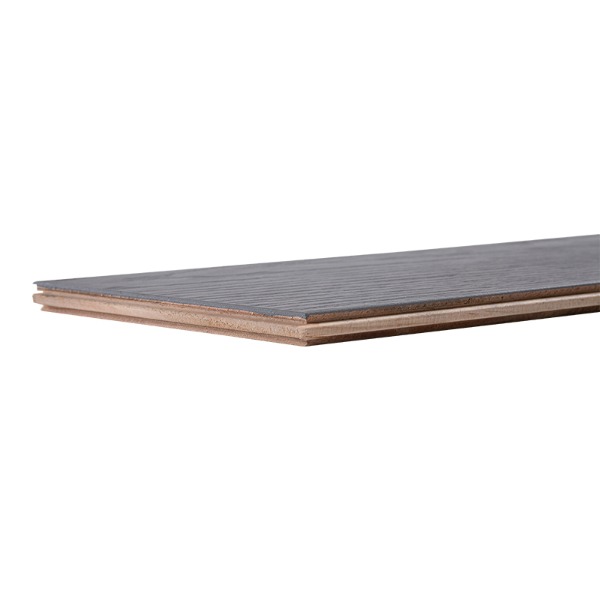
Time-tested design principles continue delivering exceptional results in contemporary applications.
Traditional herringbone flooring originated in European palaces during the 17th century. Contemporary applications maintain historical authenticity while incorporating modern materials and installation techniques. Classic herringbone patterns featuring traditional colors and finishes remain highly popular, particularly in restoration and period-appropriate renovations.
Successful classic herringbone installations follow established design principles: appropriate wood selection for the intended aesthetic, precise angle alignment maintaining 45-degree orientation, consistent block sizing and spacing, and color coordination with existing interior elements. These design considerations influence material selection and installation requirements, often increasing labor costs 10 to 20 percent for precision-oriented installations.
Contemporary interiors increasingly embrace classic herringbone patterns, demonstrating the design's timeless appeal. Light-colored woods in classic herringbone patterns coordinate effectively with Scandinavian and minimalist design schemes. Darker woods support traditional and transitional design approaches. This flexibility allows homeowners to select classic herringbone patterns regardless of overall interior design direction.
The term "fishbone parquet" occasionally emerges in flooring discussions, requiring clarification regarding precise definitions and cost implications.
Fishbone parquet refers to tighter, more intricate variations of traditional herringbone patterns. Rather than rectangular blocks, fishbone designs often incorporate smaller dimensions or unique shapes creating denser visual patterns. These alternatives typically increase material costs by 20 to 40 percent due to increased complexity and reduced waste efficiency.
Fishbone installations demand higher precision and greater installer expertise, potentially increasing labor costs 25 to 50 percent compared to standard herringbone patterns. The increased complexity requires experienced specialists and typically extends project timelines by 20 to 40 percent.
Fishbone patterns create more intricate, visually complex surfaces compared to traditional herringbone. These patterns work particularly well in spacious areas where visual complexity can be fully appreciated. Smaller rooms may appear visually overwhelming with fishbone patterns, making careful space assessment essential before selection.
Strategic planning enables quality herringbone installations within various budget parameters.
Large-scale herringbone projects can be implemented in phases, spreading costs across multiple budget cycles. Installing high-traffic areas initially, then expanding to secondary spaces, allows cost distribution while maintaining budget compliance. This approach typically costs 5 to 10 percent more due to multiple mobilization periods but provides valuable budget flexibility.
Selecting appropriate wood species relative to specific room requirements optimizes cost allocation. Using oak herringbone in living areas while reserving premium species for focal areas like fireplaces concentrates visual impact while managing overall project costs. Engineered herringbone in moisture-prone bathrooms and kitchens, paired with solid wood in living spaces, provides optimal cost-value balance.
Selecting classic or traditional herringbone patterns rather than custom designs reduces labor costs substantially. A straightforward herringbone pattern might cost $10 per square foot in labor, while custom designs with inlaid borders or mixed species approach $25 per square foot or more. Simple pattern selection delivers significant cost savings without compromising aesthetic appeal.
Obtaining multiple competitive bids provides valuable cost insights and quality assurance. Experienced herringbone specialists often command higher rates but frequently complete projects more efficiently, potentially offsetting premium pricing through reduced material waste and faster completion. Comparing total project cost rather than per-square-foot rates provides more accurate cost evaluation.
While some homeowners undertake herringbone installation independently, professional installation typically proves more cost-effective. Material waste from amateur installations often reaches 20 to 35 percent compared to professional averages of 5 to 10 percent. Imprecise angle cuts and alignment issues frequently necessitate professional correction, ultimately costing more than professional installation would have initially.
Average costs range from $25 to $40 per square foot for complete installation, including materials and labor. Budget-conscious installations might achieve $20 to $25 per square foot, while premium custom installations can exceed $50 per square foot. Costs vary substantially based on wood species, location, installer expertise, and pattern complexity.
Herringbone installations typically cost 30 to 50 percent more than straight-lay hardwood due to increased labor requirements and material waste. A straight-lay installation might cost $15 to $25 per square foot, while comparable herringbone projects range from $25 to $40 per square foot. The price differential reflects installation complexity and precision requirements.
Solid wood offers unlimited refinishing capability and superior longevity but costs more and requires stable environmental conditions. Engineered herringbone provides better moisture resistance, lower cost, and simpler installation but cannot be refinished. Kitchens, bathrooms, and basements typically favor engineered options, while living spaces and bedrooms suit solid wood better.
Oak herringbone provides excellent value, offering durability, aesthetic appeal, and reasonable pricing typically between $6 and $15 per square foot. Oak's widely available supply keeps costs moderate while delivering classic aesthetics. Homeowners seeking distinctive appearance might consider maple or walnut, though at increased cost.
Professional installers typically plan for 5 to 15 percent material waste, depending on pattern complexity and room configuration. Herringbone patterns inherently generate more waste than straight-lay installations due to diagonal cuts at pattern edges. Ordering 10 to 15 percent above calculated square footage provides appropriate contingency for waste and future repairs.
Herringbone can be installed in moisture-prone areas using engineered wood or solid wood with robust moisture barriers. Kitchens and bathrooms require careful moisture management including vapor barriers, proper ventilation, and appropriate sealant finishes. Consultation with experienced installers familiar with moisture-mitigation techniques proves essential.
Chevron features V-shaped arrangements with blocks meeting at precise angles without gaps, creating a sharper appearance. Herringbone features rectangular blocks with consistent offsets creating a zigzag pattern. Chevron requires more precise cutting and typically costs 15 to 25 percent more than herringbone due to increased installation complexity.
Project duration depends on room size and existing conditions. Typical installations progress at approximately 100 to 150 square feet per day. A 400-square-foot project might require 3 to 4 days of installation time. Subfloor preparation, underlayment installation, and finishing treatments extend total project timeline by several additional days.
Regular maintenance involves sweeping to remove debris, occasional damp mopping with hardwood-specific cleaners, and protective coatings reapplication every 3 to 5 years. Solid wood floors can be refinished every 10 to 15 years if needed. Engineered floors typically require less intensive maintenance but cannot be refinished. Annual maintenance costs typically range from $100 to $300.
Yes, quality herringbone flooring typically increases property value by 3 to 5 percent and lasts 25 to 40 years with proper maintenance. Annual ownership costs of approximately $1 to $2 per square foot prove competitive compared to alternative flooring solutions requiring more frequent replacement. The refinishing capability of solid wood provides exceptional long-term value.
We provide customers with sustainable and eco-friendly
engineered wood solutions and services.
Choose DEIF for the perfect blend of
performance and aesthetics.
