


 English
 Español
 عربى
عربى
Get Social
Choose DEIF for the perfect blend of
performance and aesthetics.
 Get Free Sample

Content
In today's competitive flooring market, generic products rarely meet the diverse needs of distributors, contractors, and project managers. A true custom wood flooring manufacturer serves as a strategic partner rather than a simple supplier, understanding that each project carries unique requirements in design, performance specifications, and supply chain logistics. With over 20 years of industry experience, leading manufacturers combine technological precision with flexible production methodologies to deliver solutions that protect project timelines and budgets while maintaining premium quality standards.
The distinction between conventional flooring producers and specialized custom manufacturers lies in their approach to problem-solving. While standard manufacturers follow rigid production templates, dedicated custom wood flooring manufacturers invest in capabilities that enable rapid prototyping, flexible sizing options, and proprietary finish development. This flexibility extends across every dimension of production, from material sourcing to final packaging, ensuring that your brand vision translates directly into marketable products.
Professional custom wood flooring manufacturer operations maintain relationships with certified suppliers worldwide, enabling access to diverse wood species that cater to distinct market preferences. Oak, walnut, maple, and specialty hardwoods each offer unique aesthetic and performance characteristics. Advanced manufacturers maintain inventory management systems that balance the demand for multiple species while ensuring FSC certifications remain uncompromised across all sourcing channels.
Custom size wood flooring represents a core differentiator. Manufacturers can produce planks ranging from narrow 3-inch formats for modern minimalist designs to wider 7-inch and beyond formats for traditional aesthetics. Strip lengths, thickness specifications (ranging from 3mm to 18mm), and edge profiles all become variables within the production parameters. This flexibility allows projects requiring specific dimensional requirements to move forward without compromising design intent.
The custom finish wood flooring category encompasses multiple aesthetic and functional options. Matte finishes deliver contemporary sophistication, while high-gloss surfaces reflect light and enhance spatial perception. Hand-scraped textures introduce vintage character, and wire-brushed surfaces provide tactile interest. Advanced UV-cured lacquer systems and water-based finishes meet environmental regulations while delivering durability ratings equivalent to traditional polyurethane technologies.
Installation efficiency directly impacts project profitability. Custom manufacturers can develop proprietary locking mechanisms tailored to specific market requirements. Engineered systems reduce installation time while improving dimensional stability, allowing contractors to complete large installations within compressed timelines without sacrificing quality.
For distributors and brands seeking market differentiation, private label flooring services represent comprehensive partnerships. Leading manufacturers provide product design consultation, packaging development aligned with brand identity, technical specification documentation, and marketing support materials. OEM/ODM arrangements allow brands to build market presence without capital investment in manufacturing infrastructure, enabling rapid market entry for new product lines.
Professional custom wood flooring manufacturers operate advanced facilities spanning 20,000 square meters or more, equipped with precision machinery from established technology leaders. German-engineered equipment including Homag and Dieffenbacher systems enables consistent quality across high-volume production runs. These systems incorporate real-time monitoring and automated quality checkpoints that prevent defects before products reach final packaging stages.
Annual production capacity reaching 2,400,000 square meters demonstrates the infrastructure scale required for large-scale order fulfillment. This capacity accommodates custom wood flooring production capacity needs for major distributors, contractors managing multiple concurrent projects, and retailers expanding product portfolios. Multi-shift operations and flexible scheduling ensure that rush orders receive priority processing without disrupting standard production timelines.
Establishing reliable custom wood flooring production requires secure material sourcing networks. Leading manufacturers maintain relationships with verified suppliers across multiple continents, reducing dependency on single-source supply and ensuring continuous production even during regional supply disruptions. FSC certification programs verify sustainable harvesting practices, while compliance documentation supports customers navigating international procurement regulations and corporate sustainability commitments.
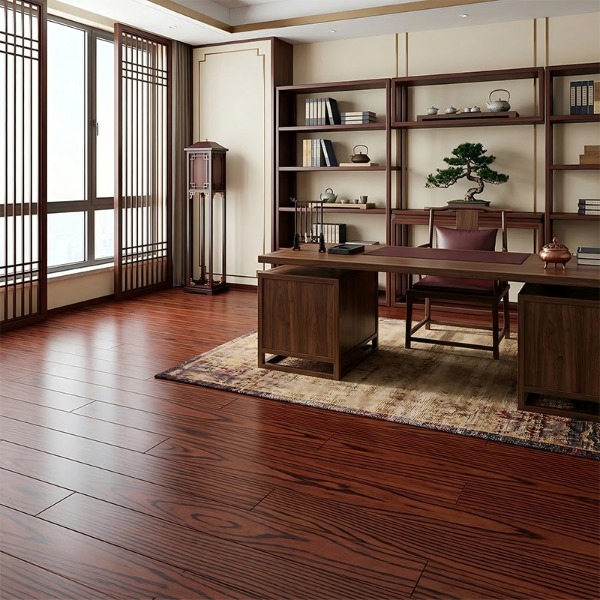
Custom flooring quality control begins at material receipt and continues through final packaging inspection. Advanced moisture meters verify that wood planks remain within specified moisture content ranges, typically 8-12 percent, preventing future warping and dimensional instability. Lock system tensile testing confirms that proprietary connection mechanisms withstand installation stress and sustained foot traffic. Surface coating thickness measurements and adhesion testing validate finish durability specifications.
Professional manufacturers maintain certifications that address regulatory requirements across major markets. CE certification indicates compliance with European Union standards covering formaldehyde emissions and mechanical properties. CARB certified flooring meets California Air Resources Board regulations, addressing emissions concerns that influence purchasing decisions throughout North America. FSC certification documents responsible forest management practices, supporting customers seeking sustainability credentials for residential and commercial projects.
| Certification | Primary Market Region | Key Requirements |
|---|---|---|
| CE Certification | European Union | Dimensional stability, formaldehyde limits |
| CARB Certified | North America | Formaldehyde emissions Phase 2 |
| FSC Certified | Global | Responsible forest management |
| ISO 9001 | Global | Quality management systems |
E0-grade formaldehyde emissions standards represent the most stringent classification available, with release rates below 0.5 mg/L. This performance meets requirements established by the Lacey Act and European Union Timber Regulation, addressing both environmental protection and occupant health considerations. Water-based finishing systems eliminate volatile organic compound emissions associated with traditional solvent-based technologies, supporting indoor air quality certifications for sensitive applications including educational and healthcare facilities.
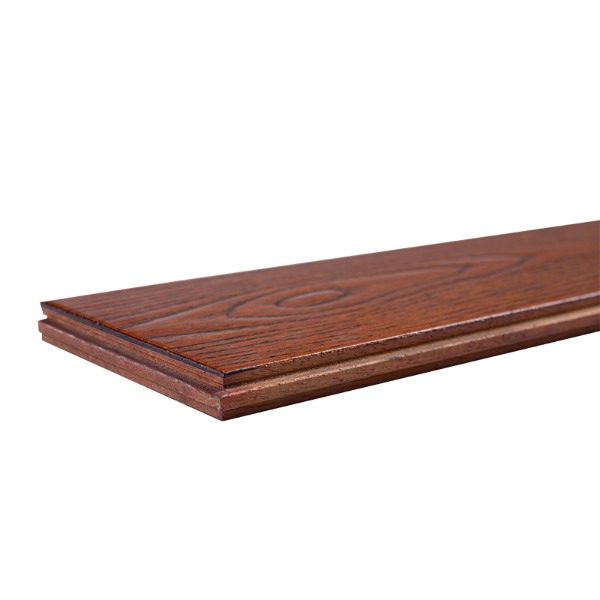
Standard custom wood flooring orders progress from order confirmation to delivery completion within 15-20 days for conventional specifications. This timeline encompasses design verification, production scheduling, quality inspection, and logistics coordination. Expedited processing options accommodate projects requiring accelerated timelines, with rush orders completing in as few as 10 days when specifications remain within established manufacturing parameters. Designers and project managers benefit from transparent communication protocols that provide status updates at each production milestone.
Beyond manufacturing execution, comprehensive project support includes technical consultation services. Manufacturers provide CAD and BIM model downloads for integration into architectural documentation and construction management platforms. Competitive bidding support helps distributors and contractors develop accurate project proposals incorporating material specifications, pricing structures, and delivery timelines. This collaborative approach transforms the manufacturer relationship from transactional supplier to strategic project partner.
Custom wood flooring reaches installation sites in optimal condition through engineered packaging protocols. Moisture-resistant materials protect planks during transit through varying climate conditions. Stackable configurations optimize container utilization, reducing per-unit shipping costs for large shipments. Professional logistics partnerships ensure reliable transportation to global destinations, with customs documentation and international regulatory compliance handled systematically. Real-time tracking systems allow project managers to monitor shipment progress and coordinate on-site delivery coordination.
Distributors seeking market differentiation benefit from comprehensive private label programs. Manufacturers collaborate on product design selection, develop custom packaging incorporating brand identity elements, and create technical documentation specifically formatted for end-customer communication. Marketing support materials including specification sheets, installation guides, and warranty documentation arrive pre-branded for immediate distribution. This turnkey approach enables distributors to expand product portfolios rapidly without investing in manufacturing infrastructure or technical expertise.
Original Equipment Manufacturing and Original Design Manufacturing models accommodate distinct business scenarios. OEM arrangements address situations where distributors possess established designs requiring production capacity and quality assurance. ODM services support brands developing new product categories, providing design engineering, material development, and production execution across the complete product development lifecycle. Both models reduce capital requirements and time-to-market compared to vertical integration strategies.
Flexible minimum order quantities enable entry-level partnerships that mature into high-volume arrangements. Initial orders can start at 500 square meters for trial batches, expanding to standard 1,000 square meter minimums as market validation confirms product acceptance. This graduated approach reduces financial risk for businesses testing new market segments or product categories, while manufacturers benefit from predictable volume growth and established quality protocols from initial partnership phases.
Standard production runs begin at 1,000 square meters for established product specifications. Trial batches and new product development orders can start at 500 square meters, accommodating businesses testing market reception before committing to full production volumes. MOQ flexibility extends to private label and custom finish projects, with pricing adjusted accordingly to reflect setup and production optimization economies.
Advanced color matching capabilities address this requirement routinely. Customers submit sample materials, photographs, or digital specifications, and manufacturers develop production samples within 72 hours. This rapid prototyping cycle allows design validation before committing full production volumes. Multiple sample iterations support refinement of finish characteristics, surface texture, and dimensional details until alignment with customer requirements achieves completion.
Batch management protocols maintain consistency through standardized production procedures and detailed documentation. Reference samples established during initial production runs serve as comparison standards for subsequent batches. Spectrophotometric color measurement systems provide objective verification that finish characteristics remain within established tolerances. Sample confirmation procedures at batch commencement ensure that production operators understand performance targets before processing begins.
Research and development teams provide consultation across material selection, finish development, and dimensional optimization. CAD modeling services enable visualization and integration into architectural documentation. Technical specification development ensures that custom products meet applicable regulatory standards and performance requirements. This collaborative approach transforms manufacturers into design partners rather than simply production facilities.
Initial development and approval samples require 5-7 days for color matching and finish validation. Production commencement follows sample approval, with standard timelines of 15-20 days from approval completion to finished goods ready for shipment. Projects requiring multiple iterations or complex finish development may extend timelines accordingly. Advance planning and clear specification communication reduce iteration cycles and support on-schedule delivery.
FSC-certified wood species form the foundation of responsible sourcing programs. Water-based finish systems eliminate volatile organic compounds associated with traditional technologies. E0-grade formaldehyde emissions standards ensure that finished products meet the most stringent environmental certifications. Private label partners can emphasize sustainability credentials throughout their marketing communications, supporting customer purchasing preferences favoring responsible manufacturing practices.
Logistics partnerships manage transportation to global destinations, with professional handling protocols protecting flooring quality throughout transit. Customs documentation, phytosanitary certifications, and regulatory compliance requirements receive systematic attention. Container consolidation optimizes freight costs for large shipments, while expedited options accommodate projects requiring rapid delivery. Real-time tracking enables project managers to coordinate on-site arrival timing with installation schedules.
Multi-stage quality control procedures validate products against established specifications before shipment authorization. International certifications including CE, CARB, and FSC provide independent verification of compliance with regulatory standards. Warranty coverage addressing manufacturing defects and performance failures provides protection extending typically 10-25 years depending on product category and application environment. Quality confidence underpins customer satisfaction and supports long-term partnership development.

We provide customers with sustainable and eco-friendly
engineered wood solutions and services.
Choose DEIF for the perfect blend of
performance and aesthetics.
