


 English
 Español
 عربى

Get Social
Choose DEIF for the perfect blend of
performance and aesthetics.
 Get Free Sample

Content
Many procurement teams approve a small sample for color and surface feel, then discover problems only after a full container arrives. Shade drift between boards, moisture levels outside the agreed range, missing test reports and finish failures are among the most common causes of claims in wholesale and commercial flooring. For a distributor or contractor, each of these issues can mean rework, delayed handover and damaged client relationships.
Solid walnut is a demanding species to source at volume. The heartwood ranges from pale golden tones to deep chocolate brown, and the sapwood is usually excluded from premium grades. Because natural variation is part of the material, a sourcing process built only on visual approval leaves too much to chance. A specification-driven approach, supported by a locked golden sample and documented test results, is the practical way to reduce that risk.
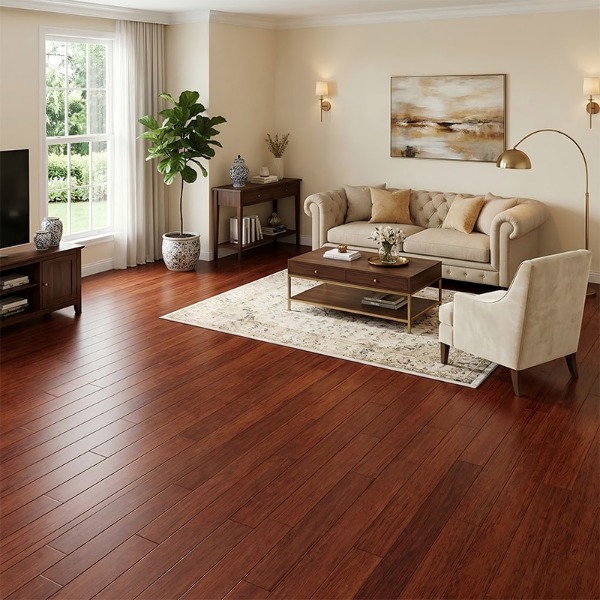
This guide is written for buyers who evaluate a solid hardwood flooring factory for bulk orders, custom programs or specification-driven commercial work. It explains the technical properties that matter, the checklist to send in an RFQ, the supplier capabilities to examine and the project types where walnut performs well.
Solid construction is the main reason specifiers choose hardwood over engineered alternatives in long-life projects. A solid board of adequate thickness can be sanded and refinished several times, which extends the useful life of a floor well beyond the first installation. For hospitality and residential developers, this changes the lifecycle cost calculation: a floor that can be refreshed rather than replaced fits better with asset management plans.
Walnut also has practical visual advantages in high-traffic areas. Its grain pattern and natural color variation help conceal minor scratches and surface wear compared with uniformly light species. Buyers should still expect visible marks under strong raking light, but the overall appearance tends to remain consistent for longer, which lowers the number of complaints from end users.
Every wood floor reacts to humidity, and a responsible sourcing document should say so clearly. Walnut performs predictably when it is properly kiln dried and acclimatized, but unsuitable conditions on site can still cause movement. The following limits should be part of any project review.
The most useful framing for a specifier is that walnut dimensional stability depends on manufacturing discipline. Proper kiln drying and precision machining reduce expansion and contraction, but they cannot compensate for a building that is still drying out or a climate that swings widely without control.
The surface finish determines maintenance expectations, appearance and the type of project where a floor performs best. The table below summarizes the most common options for wholesale programs.
| Surface Finish | Maintenance Profile | Typical Project Fit | Risk to Verify |
|---|---|---|---|
| UV lacquer | Low routine care, strong stain resistance | Hotels, offices, retail corridors | Adhesion and gloss consistency across batches |
| Hardwax oil | Spot repair possible, natural feel | Residential villas, boutique interiors | Periodic maintenance schedule and recoating |
| Wire-brushed with UV finish | Emphasizes grain, hides minor wear | Feature areas, premium residences | Brushing uniformity and edge sealing |
| Satin oil finish | Matte appearance, moderate protection | Light-traffic commercial spaces | Sheen variation and color stability |
For high-traffic commercial projects, a UV-cured lacquer usually offers the most predictable wear behavior. Oil-based finishes are attractive for residential developments where a natural surface and easy spot repair are valued, but the client must accept a documented maintenance program.
A detailed request for quotation prevents most of the disputes that appear after production starts. The following sections translate general product characteristics into measurable requirements that a factory can confirm in writing.
Walnut grading covers color range, sapwood content, knots, mineral streaks and surface defects. Instead of requesting a generic premium grade, specify the acceptable color spectrum and the maximum share of boards that may show lighter or darker tones. Agree on how many boards in each carton may fall outside the golden sample range and on how the factory will sort them before packing.
Thickness is the most important dimension for future refinishing. A thicker wear layer gives more sanding cycles over the life of the floor, so the RFQ should state the total board thickness and the wear layer thickness separately. Width, length and edge profile should also be defined, along with tolerance limits for each dimension. Custom sizes and parquet patterns usually carry longer lead times and higher minimum order quantities, so the request should note these conditions early.
Moisture content should be specified as a tested range at the time of packing, with the test method and sampling plan documented. Joinery type also matters: traditional tongue-and-groove profiles and mechanical click systems have different installation requirements and tolerance sensitivities. For large orders, machining precision directly affects the gap quality seen after installation, so profile drawings and tolerance tables should be attached to the specification.
Certificates are only useful when they match the actual batch. Many suppliers provide a cover certificate that does not reference the production lot or test report. Request the product certificate, the test report and, where relevant, the factory management system certificate, and check that each document names the same product family. Common requirements include CE for European markets, FSC chain-of-custody for sustainable sourcing, FloorScore and CARB Phase 2 for indoor air quality in North America, and E0 or equivalent formaldehyde limits in other regions.
Choosing a supplier for a large solid walnut program is less about the product brochure and more about the operational system behind it. A factory with controlled drying, reliable machining and documented inspection can produce consistent goods across repeat orders. A trading company without these capabilities may still deliver acceptable samples, but it has less control over the production conditions that matter most.
Ask for details on annual output, raw material storage, kiln capacity and the automation level of the machining lines. Kiln drying capacity is a critical bottleneck for solid hardwood, because boards must rest and dry to target moisture before machining. Peak season shortages often come from insufficient drying capacity rather than a lack of raw timber, so this question deserves a direct answer with supporting evidence such as equipment lists and site photographs.
Natural walnut varies from log to log, which is why one final inspection is rarely enough. A robust workflow checks incoming timber for species, moisture and defects, monitors the process during sawing, drying, machining and finishing, and grades finished boards before packing. Each stage should produce a record that can be linked to the production batch, so a complaint can be traced back to the cause.
Buyers often need custom sizes, tailored edge profiles, parquet patterns or color adjustments for a specific project. Ask how the factory handles prototypes, how many revision rounds are included and how the approved prototype is locked for production. Re-order consistency is the hardest part of custom work: a factory should explain how it will reproduce the same tone and profile months later, and what records it keeps to make that possible.
Verbal delivery promises are a frequent source of project delay. Request written lead times for samples, standard production and large orders, and confirm how the schedule changes with custom work or finishing complexity. A reliable supplier will state its capacity limits openly and offer a realistic schedule rather than the shortest possible promise.
| Evaluation Criterion | Suggested Weight | What to Request |
|---|---|---|
| Production and drying capacity | 25% | Kiln specifications, output data, equipment list |
| Quality control system | 25% | Inspection records, batch traceability, test reports |
| Customization capability | 15% | Prototype process, revision limits, re-order records |
| Lead time reliability | 15% | Written schedule and capacity commitment |
| Documentation quality | 10% | Certificate copies matched to production lots |
| After-project support | 10% | Replacement policy, supplementary order handling |
Project timelines often extend beyond the first delivery. Hotel renovations, multi-phase residential developments and rental portfolios frequently need supplementary boards months later. Confirm whether the factory keeps retained samples, how long it stores production records and how it handles damage claims in transit. Supplementary orders are much easier to match when the original lot number and finish specification are documented from the start.
Specifiers and distributors get better outcomes when they match the product to the project profile rather than selecting walnut only for its appearance. The table below outlines typical fits for common downstream markets, with notes on the points that deserve extra review.
| Project Type | Typical Requirement | Walnut Fit | Key Review Point |
|---|---|---|---|
| Luxury villa and private residence | Natural appearance, refinishing plan | Strong | Underfloor heating compatibility and humidity control |
| Boutique hotel and hospitality | Warm tone, durable finish | Strong | Finish selection for traffic and cleaning routines |
| Premium office and light commercial | Consistent appearance, low maintenance | Moderate | Lacquer performance and batch consistency |
| Wet or unconditioned spaces | Water exposure and humidity swings | Poor | Solid hardwood is generally not recommended |
Solid walnut hardwood flooring for luxury residential projects is most successful when the client expects a long service life and accepts routine care. In hospitality, the main challenge is aligning the finish with cleaning practices and traffic patterns, which should be discussed before the specification is locked. Sustainable building strategies also favor long-lived materials that can be refinished rather than replaced, and solid walnut fits that logic when sourcing is documented.
A structured workflow keeps the project on schedule and creates a paper trail for every decision. The stages below describe the sequence most buyers find practical for solid walnut programs.
The golden sample step deserves special attention. The approved sample should carry a label with the production reference, grade, finish code and approval date. Photographs of the sample under standard lighting help avoid disagreements later, because color perception changes with the light source.
Once the technical requirements are clear, a buyer can move from evaluation to commitment with fewer surprises. The following sequence keeps the commercial and technical discussions aligned.
We request a quotation for solid walnut hardwood flooring based on the attached specification. Please confirm the grade and golden sample reference, the moisture content range with test method, the total and wear layer thickness, the finish standard, and the certification documents linked to our production batch. Please also state your sample lead time, production lead time and re-order tolerance in writing.
It can be suitable when the boards are properly kiln dried, the heating system is designed for hardwood and the building climate is controlled. The factory should confirm the moisture range and the installation conditions in writing before the order is placed.
Yes, provided the wear layer is thick enough to support sanding. Buyers should specify the total board thickness and the wear layer thickness in the RFQ so that future maintenance plans are realistic.
Typical requests include CE documentation for European projects, FSC chain-of-custody for sustainable sourcing, and FloorScore or CARB Phase 2 for indoor air quality in North America. Each certificate should be matched to the batch or product family being shipped.
The most common risks are color drift across batches, changes in finish formulation, variation in raw timber and differences in machining tolerance. A locked golden sample, inspection records at each stage and a written tolerance table reduce these risks significantly.
Grades usually differ by color uniformity, sapwood content and the number of visible natural features. Rather than relying on a generic grade name, buyers should describe the acceptable color range and defect limits in measurable terms and attach a reference sample.
Many factories can produce parquet patterns in solid walnut, but these programs usually involve longer lead times and higher minimum order quantities. Request a prototype, confirm the pattern drawing and agree on a revision process before full production begins.

We provide customers with sustainable and eco-friendly
engineered wood solutions and services.
Choose DEIF for the perfect blend of
performance and aesthetics.
